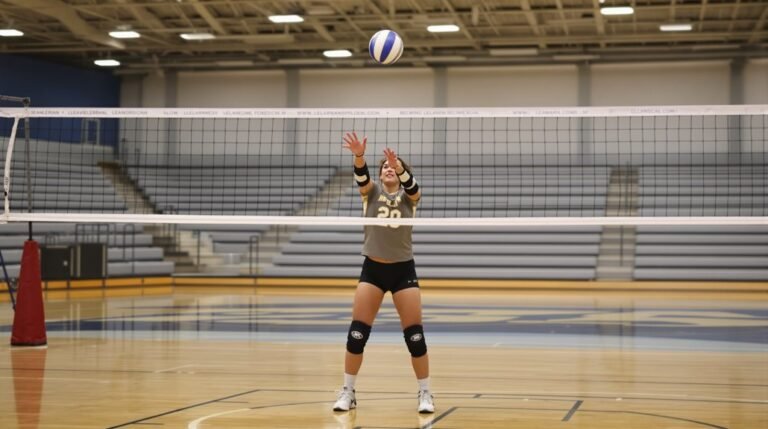


Walking into your first volleyball practice can feel overwhelming, but knowing what’s ahead will help you feel prepared and confident. Whether you’ve played sports before or this is your first time on a court, you’ll find that practice follows a logical progression designed to build your skills step by step. From warm-ups to team drills, each segment serves a specific purpose in developing your abilities.
Getting Your Body Ready With Dynamic Warm-Up Drills
Before you touch a volleyball at your first practice, you’ll need to prepare your body with a proper dynamic warm-up that takes just 5-10 minutes but makes a significant difference in your performance and safety.
Dynamic warm ups increase blood flow to muscles while mimicking the movements you’ll use during play, including lateral shuffles, jumping, and reaching.
Your coach will likely guide you through muscle activation exercises targeting your lower body first.
Walking lunges engage your glutes and quadriceps, while side shuffles prepare your legs for quick defensive movements.
You’ll also perform exercises like high knees and sumo squats to open your hips and ready your body for the low positions volleyball demands.
These drills prime your muscles for the explosive actions ahead.

➤MASTER SWING TEMPO & RHYTHM: Develop a smoother swing sequence with a flexible rope design and weighted ball feedback. This golf training aid helps golfers feel better timing, improve rhythm, and build more consistent swing patterns through repetition.

SIZE AND FIT: 2 in. x 10 in. mini loop resistance bands for users looking for extra tension. Use for rehab, prehab, warm-ups, mobility drills, and controlled band stretching.

Building Ball Control Through Partner Activities
Once you’ve completed your dynamic warm-up, you’ll shift into partner activities that form the foundation of volleyball ball control and communication skills.
Cross Court Pepper positions you and a teammate caddy-cornered across the net, where you’ll practice hitting, self-passing, self-setting, and returning the ball in continuous sequences.
Your coach will likely introduce these essential drill variations:
- Standard pepper requires passing in front of the 10-foot line before setting behind it for attack execution.
- Roll shot variations challenge you to maintain positioning while executing softer attacks.
- Tip-focused rounds develop touch and precise ball placement.
These exercises build reflexes and establish partner communication patterns you’ll rely on during games.
You’ll quickly discover that consistent platform angles and proper contact points determine your success in controlling the ball effectively.

Mastering the Basics of Serving and Passing
Partner drills sharpen your reflexes and build communication habits, but serving and passing represent the two skills you’ll use on every single rally.
Your coach will introduce fundamental serving techniques by positioning your body at a 45-degree angle to the net, with your weight shifted to your back leg. You’ll practice the toss first, using your non-dominant hand to lift the ball into an imaginary triangle in front of your hitting shoulder.
For passing strategies, you’ll learn to create a stable platform by locking both forearms together with thumbs parallel.
Contact happens at the center of your platform while your knees stay bent and your body moves underneath the ball. Weight transfers through your legs, not your arms, ensuring consistent trajectory toward your target.

Great Volleyball Gift:Focopot Volleyball Training Kit includes a ball pouch with retractable cord, an adjustable waistband, two hand straps, and a portable backpack, making it the perfect volleyball gift.

【Partner-Free Solo Training Structure】This professional solo volleyball trainer features a built-in rebound structure for continuous volleyball practice. Equipped with a premium volleyball rebounder, the device delivers automatic ball return after each strike, enabling smooth volleyball equipment training without repeated ball pickup. This standard volleyball training aid supports stable rhythm for daily independent volleyball training.
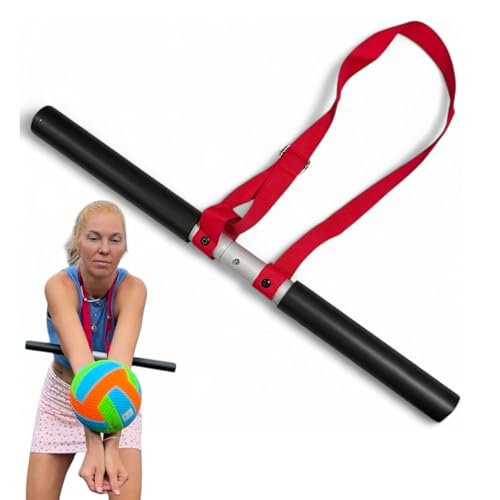
IMPROVE PASSING TECHNIQUE: The Boardee Bump-Pass volleyball gear helps you master proper arm positioning by keeping your arms straight and locked during bump-pass drills; build muscle memory for more consistent, accurate passing during solo or team practice
Learning Your Position on the Court
Understanding where you stand on the court matters just as much as knowing how to hit the ball, and your first practice will introduce the six numbered positions that form volleyball’s foundation.
Mastering court positioning is the essential first step to becoming a complete volleyball player.
The court divides into front row positions (2, 3, 4) near the net and back row positions (1, 5, 6) behind the attack line. Your coach will teach position strategy through these fundamentals:
- Position 1 (back right) serves first and rotates clockwise after winning rallies
- Front row players handle blocking and attacking while back row players focus on defense
- Each position carries specific role responsibilities based on court location
You’ll practice maintaining proper spacing during rotation drills.
Understanding front-row versus back-row distinctions helps you recognize when you can attack at the net versus staying behind the 10-foot line.


PERFECT SET: A must-have training accessory for developing fundamental setting form; Set includes 2 set trainers for volleyball players of all skill levels

Experience Unmatched Versatility with Apex Sports: Our 7x4 ft Volleyball Rebounder Net is a game-changer for players looking to elevate their skills. With a massive 28 square feet of rebounding surface, it's perfect for practicing various shots. The adjustable angles feature allows players to simulate real-game scenarios, enhancing training effectiveness. Whether you're a beginner or a pro, this net is designed to cater to all skill levels, making it an invaluable addition to your training regim

Complete Volleyball Training Set: the volleyball training equipment aid includes 1 piece of volleyball rebounder with elastic cord, 1 volleyball training wristband, 1 volleyball bracelet, 1 volleyball drawstring bag, 1 pair of volleyball arm braces, 1 pair of volleyball knee braces, 1 volleyball headband, the complete set is convenient for your daily volleyball training and practice
Putting Skills Together in Team Drills
Three-person pepper drills bring everything you’ve learned into one continuous exercise that challenges your passing, setting, and hitting simultaneously.
You’ll rotate through positions while maintaining proper form, spacing yourself 10-15 feet from teammates for ideal ball control. This skill integration develops your conditioning and footwork while reinforcing fundamental techniques.
Your coach will introduce fill-in drills where you’ll rotate seamlessly between defender, attacker, and setter roles.
These exercises teach team strategy by showing how positions connect during actual gameplay. You’ll learn to replace teammates immediately after they attack, keeping the drill flowing without interruption.
Cooperative scoring systems reward your team for maintaining longer rallies, building confidence through achievable goals.
These measurable benchmarks help you track progress while experiencing the pressure of game-like situations in a supportive environment.
What to Expect From Your First Practice Timeline
Now that you understand how drills connect your individual skills to team play, knowing how your first practice unfolds will help you prepare mentally for each phase of training.
Understanding practice structure helps you mentally prepare for each training phase and builds confidence from day one.
Your coach will structure the session around specific practice goals, beginning with warm-up activities that establish team dynamics and communication strategies early. Expect skill assessment opportunities throughout each segment.
Here’s what a typical 90-minute first practice looks like:
- Warm-up phase (10-15 minutes): Light physical activation followed by ball control exercises and passing patterns
- Skill development (30-40 minutes): Serving, passing, and fundamental movement drills in 10-minute blocks
- Team play and wrap-up (35-45 minutes): Small-sided games, competitive activities, and coaching feedback
Mental preparation matters because your coach will evaluate foundational skills while building team connections from the start.

Frequently Asked Questions
What Should I Wear and Bring to My First Volleyball Practice?
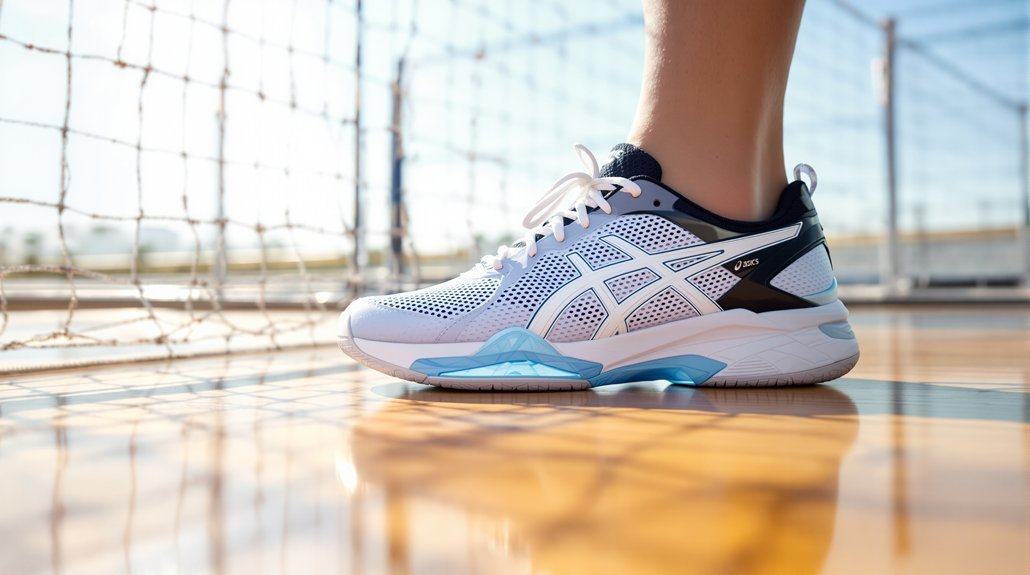
You’ll want to wear a moisture-wicking athletic top, breathable shorts or spandex, and appropriate footwear with non-marking rubber soles designed for court traction.
Don’t forget knee pads for floor protection and supportive athletic socks.
Your essential gear should include a reusable water bottle, a sweat towel, and a bag to carry everything.
Bring hair ties if needed, and consider packing an extra set of dry clothes for after practice.
How Sore Will I Be After My First Volleyball Practice?
You’ll likely experience significant soreness 24-72 hours after your first practice, as jumping, spiking, and landing create microscopic muscle fiber tears.
For effective muscle recovery, engage in light movement and foam roll for 20-30 seconds per muscle group.
Your soreness management should include proper nutrition, particularly carbohydrates within 30 minutes post-practice.
Expect full recovery within three days as your body adapts to these new demands.
What if I’ve Never Played Volleyball Before Attending My First Practice?
You don’t need any prior experience to attend your first practice.
Coaches design beginner sessions around volleyball basics like platform passing, proper stance, and underhand serving, so you’ll learn foundational skills from the ground up.
Team dynamics also play a role, as experienced players often help newcomers feel comfortable.
Expect patience from instructors who understand that mistakes are part of learning, and focus on developing consistent technique rather than perfect execution.
Recent Posts

Should I Practice Any Skills at Home Before My First Team Practice?
You can absolutely prepare at home before your first practice by setting goals around basic movements and practicing drills against a wall.
Focus on simple ball handling for passing and setting, footwork patterns like shuffling, and core exercises such as planks and push-ups.
These foundational activities help you absorb team concepts faster during actual practice time, where coaches prioritize group dynamics over individual skill development.
How Do Coaches Decide Which Position I’ll Play on the Team?
Coaches determine your position through position assessment during tryouts and early practices, evaluating your physical attributes, skills, and athletic tendencies.
They’ll observe your height, vertical jump, arm reach, and movement speed to identify where you’ll contribute most effectively.
Your player strengths—whether you excel at passing, hitting, blocking, or setting—guide their decisions.
They also consider team needs and how your abilities complement other players within the rotation system.
Bottom Line
Your first volleyball practice marks the beginning of an exciting athletic journey. You’ll build a strong foundation through dynamic warm-ups, partner drills, and fundamental techniques that serve you throughout your playing career. By focusing on proper form, communication, and teamwork from day one, you’re setting yourself up for success on the court. Embrace each drill, ask questions, and trust the process—your skills will develop with consistent effort and dedication.