


If you’ve watched volleyball recently, you’ve seen rally scoring in action—it’s the system where every single rally awards a point, no matter which team served. This format keeps matches moving and creates constant pressure on both sides of the net. But it wasn’t always this way, and understanding how rally scoring changed the game reveals why modern volleyball demands different skills than it did decades ago.
Key Takeaways
- Rally scoring awards a point on every rally, regardless of which team served the ball.
- The receiving team earns both a point and the serve when they win a rally.
- Standard indoor sets are played to 25 points, requiring a two-point margin to win.
- Rally scoring replaced side-out scoring in 1999, making matches faster and more predictable.
- Every error immediately costs your team a point, increasing the importance of consistent play.
What Is Rally Scoring in Volleyball?
Rally scoring keeps the action moving in volleyball by awarding a point on every single rally, no matter which team served the ball.
If your team wins the rally, you score a point. If the receiving team wins, they earn the point and take over the serve.
This system replaced the older side-out format in the late 1990s.
The change made match lengths easier to predict and games more exciting for fans.
Here’s how it works in indoor volleyball: teams play sets to 25 points and must win by two.
Matches follow a best-of-five format, with a deciding fifth set going to just 15 points.
Every mistake costs you, so strong serving, consistent passing, and minimizing errors become essential skills under rally scoring.

How Rally Scoring Works
Because every single play puts a point on the board, you’ll notice the scoreboard changes constantly throughout a match. A point awarded on every rally means no dead plays exist. If the serving team wins, they score and keep serving. If the receiving team wins, they earn both a point and the serve.
Every rally counts—no wasted plays, just constant scoring action that keeps the momentum alive.
Indoor sets are played to 25 points with a win by two requirement. The deciding fifth set goes to 15 points, still win by two.
Here’s how you can score:
- Ground the ball on your opponent’s court
- Force an opponent into a net violation
- Cause them to hit the ball out of bounds
- Benefit from a service error
- Make them commit a four-hit fault
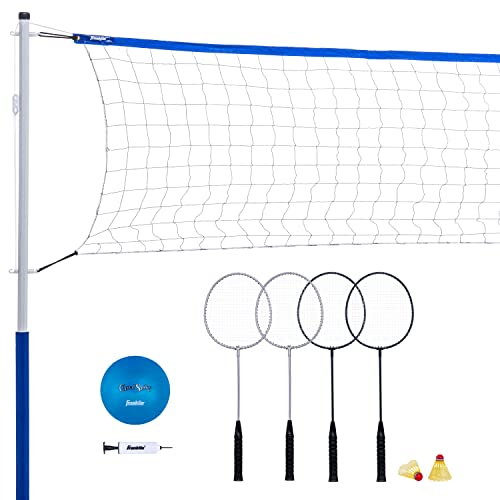
COMBO SET: Play beach volleyball or badminton in the backyard or in the park. Whether you’re at a family barbecue or having a get-together with friends, this starter volleyball and badminton combo set is everything you need for outdoor fun!

Premium Tarpaulin Material - Built with heavy-duty tarpaulin for exceptional durability and long-lasting performance.

Complete volleyball and badminton set for outdoor use
Side-Out Scoring vs. Rally Scoring
Understanding how points hit the scoreboard matters, but volleyball hasn’t always worked the way it does now.
Before 1999, volleyball used side-out scoring. Under this system, only the team that served the ball could earn a point. If the receiving team won the rally, they’d gain the serve but nothing else. Sets were played to 15, and matches could drag on unpredictably.
Rally scoring changed everything. Now, a point is awarded on every single rally, regardless of who served. When your team wins the rally, you score. Period. Modern indoor sets go to 25, and you must win by two points.
This shift matters strategically. Rally scoring punishes unforced errors immediately since every mistake costs you. You’ll notice teams focusing harder on consistent passing and mental composure throughout each set.


Complete Volleyball Training Set: the volleyball training equipment aid includes 1 piece of volleyball rebounder with elastic cord, 1 volleyball training wristband, 1 volleyball bracelet, 1 volleyball drawstring bag, 1 pair of volleyball arm braces, 1 pair of volleyball knee braces, 1 volleyball headband, the complete set is convenient for your daily volleyball training and practice

IMPROVE PASSING TECHNIQUE: The Boardee Bump-Pass volleyball gear helps you master proper arm positioning by keeping your arms straight and locked during bump-pass drills; build muscle memory for more consistent, accurate passing during solo or team practice

Complete Volleyball Training Equipment: This all-in-one package includes a Pouch, perfected Waistband, improved Elastic Cord, upgraded Hand Straps, larger Drawstring Backpack and Gift Box, making it a great Volleyball gift.
When Rally Scoring Was Adopted
When the FIVB officially adopted rally scoring in 1999, volleyball entered a new era that would reshape the sport at every level. This rule change replaced side-out scoring and made matches more TV-friendly with predictable timing.
USA Volleyball approved the shift in February 1999, aligning with international standards by November.
You saw rally scoring debut on the Olympic stage at the 2000 Sydney Olympics. The new system introduced 25-point sets, up from the old 15-point format.
Here’s what this shift meant for the sport:
- Matches became easier to schedule for broadcasts
- Every rally carried scoring potential
- Games moved at a faster, more engaging pace
- Indoor, beach, and sitting volleyball all adopted the standard
- By the early 2000s, rally scoring was universal worldwide
Rally Scoring Across Different Volleyball Formats
Although rally scoring serves as the universal standard across volleyball formats, the specific rules vary depending on whether you’re watching indoor, beach, or sitting volleyball.
In indoor volleyball, competitive matches use best-of-five sets. You’ll play the first four sets to 25 points, and the deciding set goes to 15. Every set requires a win by two points. A point is awarded on every rally, regardless of which team was serving.
Beach volleyball takes a slightly different approach. Matches are typically best-of-three, with the first two sets played to 21 points. The third set, if needed, goes to 15. You still need that two-point margin to close out any set.
Sitting volleyball follows the same rally scoring principle, keeping point-per-rally consistent across all formats.

Strategic Impact of Rally Scoring
Under rally scoring, every single contact carries weight because mistakes immediately appear on the scoreboard. You can’t afford unforced errors when each one hands your opponent a free point.
A single serving error costs you directly, making consistent passing essential for your team’s success.
Rally scoring rewards teams that apply serve pressure effectively. An aggressive serve that forces a poor pass converts instantly to scoreboard advantage.
- Sideout percentage matters more — efficient offense translates directly to point production
- Mental toughness separates good teams from great ones during extended 24-24 battles
- Risk management shifts late in sets — you’ll see more conservative plays under pressure
- Serving becomes a weapon rather than just a way to start play
- Focus must remain constant because momentum swings change scores rapidly

Great Volleyball Gift:Focopot Volleyball Training Kit includes a ball pouch with retractable cord, an adjustable waistband, two hand straps, and a portable backpack, making it the perfect volleyball gift.

GREAT FOR SOLO TRAINING: With the aid it becomes very easy to practice arm swing technique and tosses multiple times in a row. The elastic cord guides the ball back after every swing. No need for interrupting the training in order to fetch the ball. Multiple fast repetitions in a row get you in a state of flow: this makes it easy to perfect technique through quick feedback.
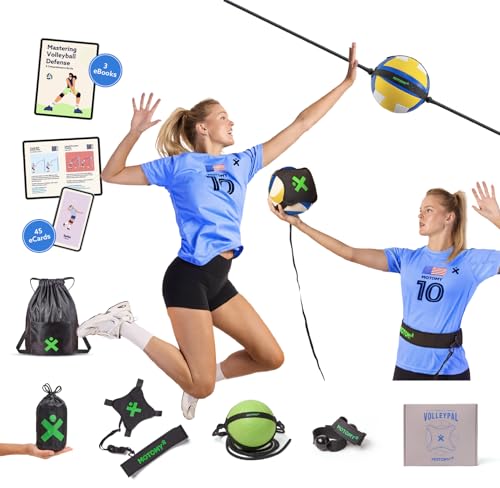
Complete Volleyball Gift Set: MasterKit box includes serve trainer (pouch, waistband, cord), setting straps, spike trainer (ball harness, emulsion cords), drawstring bag, travel bag and gift-ready box; volleyball not included
Frequently Asked Questions
What Is Rally Scoring in Volleyball?
Rally scoring means you’ll earn a point on every single rally, whether your team served or not. This system keeps the game moving through service rotations, player substitutions, and timeout strategy decisions.
Your coach signals plays while managing defensive alignments and offensive systems. Serve variations matter because losing any rally costs a point. Referee mechanics guarantee proper ball handling calls. Sets go to 25 points, win by two.
What Does Rally Scoring Mean?
Rally scoring means you earn a point on every rally, whether you’re serving or on serve receive. This system speeds up match tempo and creates constant pressure plays.
You’ll notice point streaks can shift psychological momentum quickly, making timeout use and scoring strategy vital. After each rally, watch referee signals to confirm the point and rotation rules—the winning team always serves next.
Recent Posts


What Is the Difference Between Side-Out Scoring and Rally Scoring?
In side-out scoring, you only score when your team serves—winning a rally on defense just earns service rotation.
Rally scoring awards a point every play, which shortens match duration and creates constant pressure situations.
This change affects coaching strategies, substitution patterns, and timeout tactics since every error costs you.
Referees signal points after each rally, and player stamina matters more with predictable scoring fairness throughout the set.
When Did They Change Volleyball to Rally Scoring?
You’ll find the 1990s shift happened gradually across different levels.
The 1999 international rule committee officially adopted rally scoring, with the 2000 Olympics showcasing it globally.
Professional adoption followed quickly due to broadcast influence and predictable match length.
The college switch came shortly after, while high school implementation rolled out over the following years.
This change transformed how every point matters in modern volleyball.
Bottom Line
Now you understand why every point matters in modern volleyball. Rally scoring transformed the game by making it faster, more exciting, and easier to follow. Whether you’re watching a high school match or Olympic competition, you’ll see the same system rewarding consistent play and punishing errors. Keep this knowledge in mind next time you’re courtside—you’ll appreciate the strategic depth behind every serve and dig.