

You’ll want arm sleeves that combine protection, moisture control, and a secure fit for volleyball. The copper-infused sleeve covers forearm to triceps with antimicrobial moisture management and steady compression for warmth and circulation. The Minatee pads forearm with 4 mm closed-cell cushioning, plus a thumb hole and four-way stretch to prevent ride-up during digs. A lightweight elbow-length option prioritizes mobility and ventilation with silicone interior grips. Curious which model fits your game?
Key Takeaways
- Copper-infused sleeves offer lasting antimicrobial sweat-wicking, breathable fabric with 85% copper nylon for cooling comfort during long practices.
- 4-way stretch with 10–20% spandex provides snug compression, minimizing slipping and maintaining pad alignment during rapid volleyball moves.
- 3–6 mm padded forearm options balance protection from ball sting with preserved tactile feel for passing and setting.
- Thumb holes and silicone grip zones keep sleeves in place, reducing chafing and ensuring secure forearm protection through dives.
- Durable nylon/spandex blends are easy to care for (hand wash, air dry) and come in full- or elbow-length options for customizable coverage.
| Copper-Infused Arm Sleeve for Forearm to Triceps | 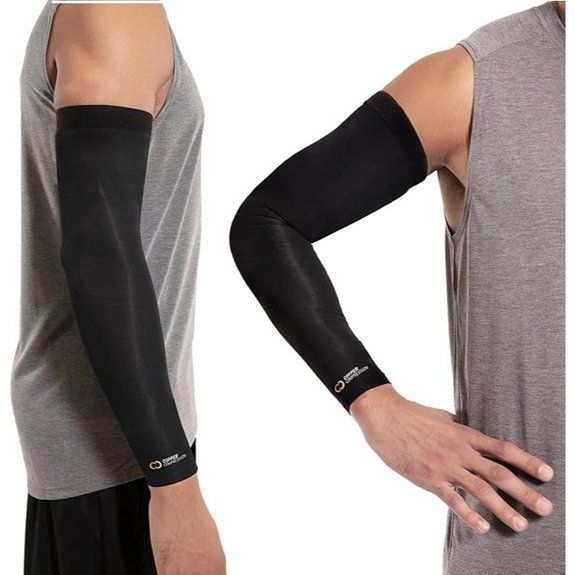 | Therapy-Grade Support | Category: Copper Compression Arm Sleeve | Material: Copper nylon / spandex (85% copper nylon, 15% spandex) | Target area: Elbow, biceps, triceps, forearm | VIEW LATEST PRICE | Read Our Analysis |
| Minatee Volleyball Arm Sleeves with Protection Pads | 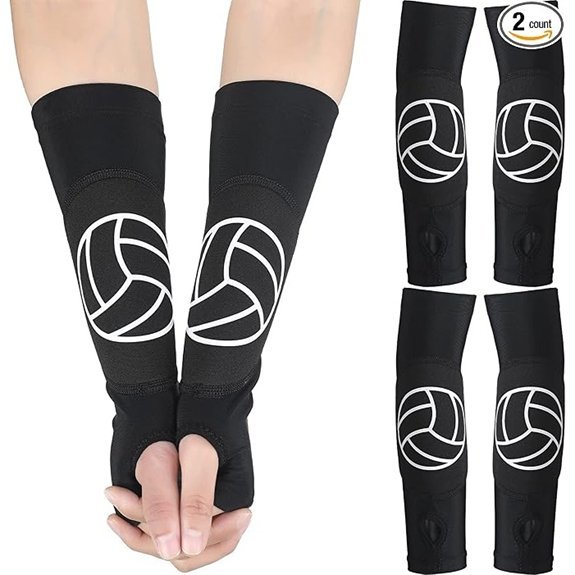 | Protective Performance | Category: Arm Sleeves | Material: Polyamide / spandex | Target area: Forearm | VIEW LATEST PRICE | Read Our Analysis |
| Minatee Volleyball Arm Sleeves with Protection Pads | | Volleyball Essential | Category: Arm Sleeves | Material: Polyamide / spandex | Target area: Forearm | VIEW LATEST PRICE | Read Our Analysis |
More Details on Our Top Picks
Copper-Infused Arm Sleeve for Forearm to Triceps
If you need steady rehab support from forearm through triceps during volleyball, this copper-infused full-arm sleeve delivers steady compression, 85% copper nylon fabric for sweat-wicking performance, and an ambidextrous, snug fit.
Made from 85% copper nylon and 15% spandex, it wicks sweat and stays breathable through long practices. The fabric infusion remains effective for the product life, so you don’t have to replace it after a few workouts. It fits either arm and stays snug without pinching, thanks to four-way stretch and interior grip zones. Wear it for elbow through forearm support during tennis, golf, or volleyball drills, and you’ll notice steadier warmth and less fatigue in your biceps and triceps. Choose your size using that simple arm-measure guideline. Care is simple: handwash gently and air dry after use daily.
- Category:Copper Compression Arm Sleeve
- Material:Copper nylon / spandex (85% copper nylon, 15% spandex)
- Target area:Elbow, biceps, triceps, forearm
- Size options:Small, Medium, Large, X-Large, 2X/XX-Large
- Use case:Rehab and athletic support (elbow/arm), general compression
- Care instructions:Handwash with gentle detergent; air dry
- Additional Feature:Four-way stretch
- Additional Feature:Interior grip zones
- Additional Feature:All-day wear comfort
Minatee Volleyball Arm Sleeves with Protection Pads
These Minatee Volleyball Arm Sleeves are a solid pick if you want reliable protection with everyday comfort, especially for players who dive for loose balls or take hard serves.
With a 4 mm padded forearm cushion, they shield your wrists and forearms from ball sting and floor burns during dives and hard serves. The thumb hole keeps the sleeve in place and reduces chafing while you move. Made from breathable polyamide and spandex, they stay light and dry. Each pack includes two 12-inch sleeves in white and black, suitable for unisex players, drills and practices, offering support and grip.
- Category:Arm Sleeves
- Material:Polyamide / spandex
- Target area:Forearm
- Size options:12 Inch
- Use case:Volleyball drills, games, training
- Care instructions:(Care instruction not specified)
- Additional Feature:4 mm padded forearm cushion
- Additional Feature:Thumb hole design
- Additional Feature:Volleyball-shaped embroidery
Minatee Volleyball Arm Sleeves with Protection Pads
For volleyball players who want solid forearm protection plus a secure thumb-hole fit, Minatee arm sleeves deliver a padded 4 mm cushion and moisture-managing fabric. And the thumb hole design keeps your hand flexible, reduces chafing, and prevents slipping during dives. Made by Minatee, these 12-inch sleeves come in white and black and use polyamide with spandex for stretch. They offer a breathable, lightweight feel with a 4 mm forearm pad that cushions wrists and helps resist floor burns. With two sleeves per pack, you get consistent protection across drills, practices, and matches. A practical gift for teammates too.
- Category:Arm Sleeves
- Material:Polyamide / spandex
- Target area:Forearm
- Size options:12 Inch
- Use case:Volleyball drills, games, training
- Care instructions:(Care instruction not specified)
- Additional Feature:4 mm padded forearm cushion
- Additional Feature:Thumb hole design
- Additional Feature:Two-item package
Factors to Consider When Choosing Arm Sleeves for Volleyball
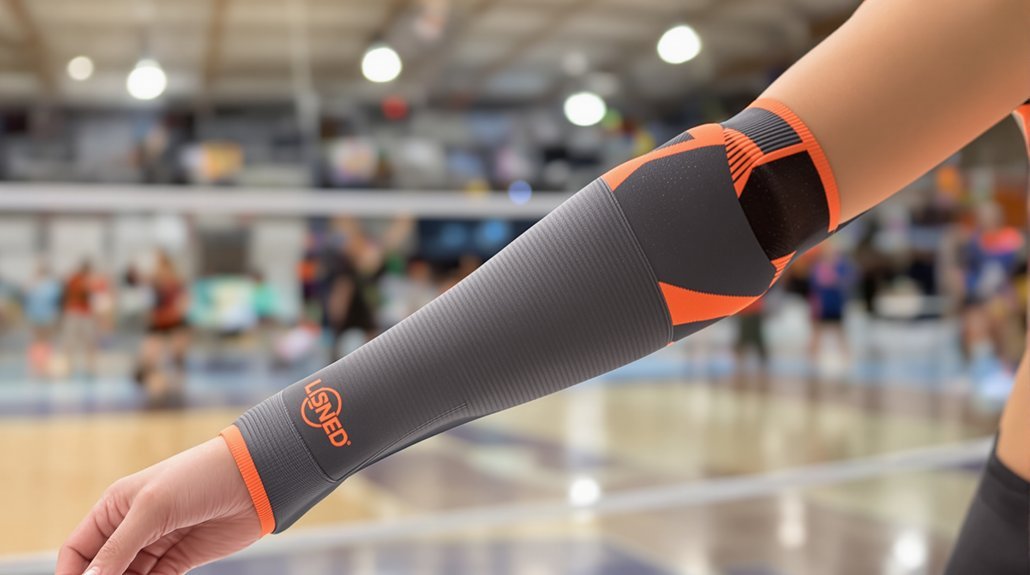
Start with sizing and fit—measure your upper arm and elbow, then pick a sleeve that feels snug but not tight. Prioritize material comfort and elasticity range, choosing fabrics that stretch about 15–25% and stay soft after washing. Assess protection level and breathability, opting for light compression or padded sleeves with moisture-wicking fabric for all-day play.
Sizing and Fit
When choosing arm sleeves for volleyball, start with a precise fit by measuring the circumference of your arm about 5 inches (12–13 cm) above the elbow and comparing it to the sleeve’s sizing chart. Your measurement guides sizing; if you’re between two options, opt for the smaller size for better compression and reduced slipping, but avoid a size that causes pain or cuts off circulation. Consider sleeve length—12-inch, or longer options—so the padded area covers the forearm where you contact the ball and reaches your wrist or elbow coverage. Check whether the design is ambidextrous or hand-specific and whether it has thumb holes to stay in place without limiting finger movement. Make certain the fabric offers 4-way stretch for a snug fit that resists bunching.
Material Comfort
As you choose arm sleeves, prioritize breathable, moisture-wicking fabrics like nylon/spandex blends to keep sweat from pooling and slipping during long matches. Look for four-way stretch so you can extend your elbow and wrist freely without bunching or restricting play. Aim for lightweight, thin padding in the 3–6 mm range to balance protection with tactile feel when you pass or strike. Favor soft, seamless or flatlock stitching and interior grip zones to minimize chafing and keep sleeves in place during quick moves. Choose materials that are durable and easy to care for, ideally machine- or hand-washable with air-dry drying, so elasticity lasts across many practices and games. If you test them, check how they feel after sets and adjust size if movement feels sticky.
Protection Level
If you’ve already chosen breathable, flexible fabrics, the next step is weighing how much protection you want from forearm sleeves. Thicker padding, typically 3–6 mm, boosts impact and floor-burn protection but can limit forearm flexibility and feel. Consider pad placement: full-length forearm pads defend against dives, while focused elbow or wrist pads cover specific contact points. Look for sleeves with multi-layer or shock-absorbing foam that disperses force to reduce sting from hard hits and repeated ball contact. Balance protection with breathability and mobility—dense materials raise heat and can slow quick digs or passes. Check secure-fit features like thumb holes, silicone grippers, and tapered compression to keep pads aligned and avoid gaps at impact. Choose a model that lets you adjust coverage as needed easily.
Breathability Moisture
Breathably comfortable arm sleeves start with the right fabric choices and design features built for moisture management. Look for synthetic blends like polyamide or nylon with spandex, because they pull sweat away from skin and dry faster than cotton, reducing clamminess during long practices. Breathability depends on fabric weight and knit structure; lighter meshes or 4-way-stretch knits allow more air flow and cooling, helping prevent forearm and elbow overheating. Moisture management matters for grip and skin health, since sleeves that move sweat to the outer layer reduce dampness, chafing, odor, and bacterial growth. Features such as perforations, thinner inner-elbow panels, and thumb-holes improve ventilation where heat and sweat accumulate most. Also follow gentle wash and air-dry to preserve performance for longer-lasting breathability and comfort.
Elasticity Range
When evaluating elasticity, choose a 4-way stretch that offers about 15–30% initial give for easy donning and steady recovery for snug support. Look for fabrics with at least 10–20% spandex content to guarantee consistent compression during hits, dives, and overhead reaches. The sleeve should elongate comfortably by 30–50% during dynamic movements like serving and blocking, so you don’t feel restricted. Choose materials that recover after repeated stretches, keeping their shape after dozens of wears and washes. Balance matters: too loose reduces padding alignment and protection, too tight can restrict circulation and hinder proprioception. Pick a sleeve that feels snug but not painful for long practice sessions. Test in both dry and sweaty conditions to confirm grip and smooth movement without chafing or slipping altogether.
Durability Care
Generally, you should prioritize durability by choosing sleeves with high-denier blends or tightly knit fabrics like nylon/spandex. Look for denser weaves because they resist abrasion from floor contact and repeated ball impacts. Check stitching and seams—flatlock construction and reinforced thumb holes reduce tearing and irritation during sliding and digging. If you want padding, choose models that specify 3–6 mm with durable foam or gel inserts; thicker, closed-cell materials hold shape and protection longer. Follow care guidelines to preserve elasticity and color: handwash or machine wash on gentle with mild detergent, then air dry. Rotate at least two pairs so you don’t overwork a single layer, and allow full drying between uses to limit sweat-related fiber degradation and odors that can speed up material failure. With the right care, durability lasts longer. Trust tested design choices for reliable performance season after season.
Coverage Length
Arm sleeve length matters as much as padding or fit, because it affects protection and mobility during play. Short sleeves cover the forearm only, about 8–12 inches, prioritizing padded protection for passing and digging without constraining elbow movement. If you need extra protection for the elbow joint, consider elbow-length sleeves at roughly 12–16 inches, which reduce bruising and floor-burn risk during dives. For broader protection and warmth, full-arm sleeves extend 16–22 inches from wrist to upper arm, though they can limit ventilation around the elbow. Choose length based on role and movement needs: libero or defensive specialists often prefer forearm or elbow-lengths, while hitters may favor shorter lengths for swing freedom. Measure coverage from wrist to just above the elbow for accurate fit checks.
Grip and Stay-Put
Look for sleeves that stay put the moment you start moving and diving. Interior silicone grip zones and thumb holes reduce slipping during passes and spikes, so you won’t chase the sleeve after every play. Choose fabrics with 4-way stretch and snug compression; they conform to your arm and resist bunching as you stretch into returns or reach for a dig. Favor designs with elasticized openings and a tapered fit—wider at the biceps, narrower at the wrist—to keep position during dives. Use lightweight, moisture-wicking materials that stay grippy even when sweaty, not slick. Check that forearm padding or embroidery patterns don’t create bumps that push the sleeve out of place. Test different brands in practice to confirm comfort, grip, and stay-put performance under pressure.
Bottom Line
You’ll pick better armor for the court by matching protection to your style. If you want all-day comfort and antimicrobial vibes, choose the copper-infused sleeve for warmth and steady compression. For rugged digs, the 4 mm Minatee forearm pads with a thumb hole keep your forearm protected without crowding your motion. If ventilation matters most, opt for the lightweight elbow-length sleeve with silicone grips to stay in place through quick rallies and confidence on court.