

You’ve probably caught yourself doing it—glancing at another child’s report card, mentioning how a neighbor’s daughter already reads chapter books, or praising your son by saying he’s faster than his teammate. These comparisons feel harmless, even motivating. But research shows they’re quietly reshaping how your child sees themselves, often in ways that won’t surface until much later. What’s actually happening in their developing brain when you compare them to others?
Key Takeaways
- Parental comparisons correlate with 28% lower teen self-esteem and persistent negative self-evaluation lasting 8–12 months.
- Performance-based approval fosters contingent self-worth, increasing impostor feelings and reducing willingness to take professional risks.
- Daily comparisons reduce self-worth scores by 15.3 points compared to non-exposed peers across developmental stages.
- Chronic comparison exposure links to 2.3 times higher risk of clinical depression by age 25.
- Frequent sibling comparisons shift family dynamics toward competitive strain and damaged relationships between children.
How Social Comparison Begins in the Preschool Years
Long before children enter formal schoolrooms, they’re already sizing themselves up against their peers. Research shows infants as young as 6-10 months expect resources to be distributed equally, demonstrating early empathy for fairness.
Children begin comparing themselves to others remarkably early, with babies showing expectations about fair distribution before they can even walk.
By age three, children actively divide items equally between others. Between ages 4-5, preschoolers begin making direct social comparisons while maintaining positive self-views.
What’s particularly important is how young children interpret performance differences. Preschoolers hold strong effort beliefs—they think trying harder can close any gap with higher-performing peers. They view achievement differences as changeable rather than fixed. This optimistic outlook protects their confidence even when others outperform them.
However, children aged five to six will already accept personal costs to avoid receiving fewer resources than peers, showing comparison’s growing influence on behavior. University of Michigan psychologists found that peer gender plays a critical role in how preschoolers respond to being outperformed.

The Gender Factor: Why Who Your Child Is Compared To Matters
When parents compare their daughter to a neighbor’s son or their son to a female classmate, they’re often measuring children against fundamentally different developmental timelines. Research on 226,980 children reveals girls are 21% more likely to be developmentally on track than boys, particularly in social-emotional skills. These differences affect identity formation and peer norms in significant ways.
Consider three key developmental patterns:
- Girls typically lead in early language and fine motor skills, while boys often excel in visual-spatial tasks by age three
- Individual variation exceeds average gender differences—many boys show strong verbal skills
- Teacher ratings favor girls’ social adjustment as early as kindergarten
Cross-gender comparisons ignore these natural variations, potentially damaging your child’s self-perception and creating unrealistic expectations. Boys show greater variability in social skills ratings across elementary years, making year-to-year comparisons particularly unreliable.
When Parents Model Comparison Behavior: The Ripple Effect
Your child watches everything you do, including how you evaluate others. When you frequently compare family members, friends, or colleagues, your child absorbs this behavior through peer mirroring—replicating your comparison language in their own interactions. Research shows children develop these patterns six months earlier when exposed to parental modeling, creating feedback loops that reinforce comparative thinking.
| What Parents Model | Child’s Response | Long-Term Impact |
|---|---|---|
| “Why can’t you be like…” | Adopts same phrases with peers | 37% higher anxiety disorders |
| Sibling comparisons | Competitive strain replaces cooperation | Damaged family relationships |
| Performance-based approval | Contingent self-worth develops | 68% experience impostor syndrome |
| Judgmental peer comments | Increased critical attitudes | 29% reduced professional risk-taking |
| Constant measurement focus | Fear of evaluation emerges | Chronic emotional regulation difficulties |
Your comparison habits become their internal framework for self-evaluation. Excessive parental direction during activities can particularly undermine children’s abilities to control attention and emotions, making it harder for them to develop independent self-assessment skills rather than relying on external comparisons.

The Self-Esteem Cost of Constant Comparisons
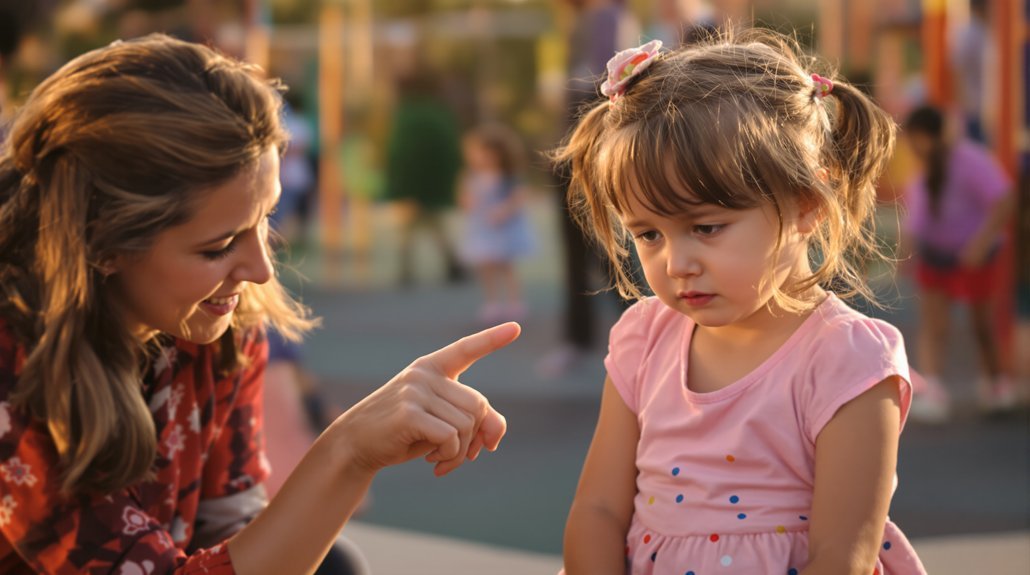
Every time you compare your child to siblings or peers, you’re directly undermining their sense of self-worth. Research shows teens exposed to parental comparisons demonstrate 28% lower self-esteem scores and develop persistent negative self-evaluation patterns lasting 8-12 months.
The damage intensifies during critical developmental windows:
- Ages 12-14 show 300% higher sensitivity to peer benchmarking than later adolescent years
- Girls experience 31% greater self-esteem decline than boys from identical comparison exposure
- Daily comparisons reduce self-worth scores by 15.3 points compared to non-exposed peers
Achievement pressure from constant comparisons creates lasting harm. Adolescents with chronic comparison exposure face 2.3 times higher risk of clinical depression by age 25, transforming temporary parental criticism into permanent psychological consequences. When parents compare their children to seemingly “better” peers, teens internalize these comparisons and begin making similar upward comparisons themselves, perpetuating a cycle of feeling inadequate.
Why Comparison Sensitivity Decreases With Age (And What This Teaches Us)
The good news: your child’s vulnerability to comparisons naturally diminishes as they mature. Research shows younger children exhibit substantially reduced responsiveness to evaluating differences in social situations compared to adults.
Older children demonstrate intermediate sensitivity, showing adult-like processing in some contexts but reduced sensitivity in others. This progression reflects cognitive maturation—the brain’s developing capacity to assess information more objectively. Children’s evaluations become less affected by surface-level variations in comparison scenarios as they develop more sophisticated analytical skills.
Between ages 11-15, specific developmental windows emerge where children become particularly sensitive to peer feedback, then gradually stabilize. As emotion regulation skills strengthen through adolescence, your child develops better tools to process comparisons without internalizing them.

Frequently Asked Questions
How Can I Praise My Child’s Achievements Without Comparing Them to Others?
Focus on specific praise that describes what your child actually did, like “You practiced that math problem three times until you solved it.”
Use effort-focused language such as “Your hard work on this project really shows” rather than statements like “You’re smarter than your classmates.”
Highlight personal progress with phrases like “You’ve improved your reading speed” or “You figured out a new strategy.”
This approach builds intrinsic motivation and resilience.
What Should I Do if My Child Constantly Compares Themselves to Siblings?
Help your child set personal benchmarks rather than measuring themselves against siblings. Encourage individual goals based on their unique strengths and interests.
Model positive self-talk by verbalizing your own progress without comparing yourself to others. Create one-on-one time to celebrate their specific improvements.
When they make comparisons, redirect the conversation to their growth journey. Teach them that each family member has different timelines and talents, making direct comparisons inaccurate and unhelpful.
Are Some Children Naturally More Sensitive to Social Comparisons Than Others?
Yes, research shows children have different comparison orientation profiles based on temperamental sensitivity and genetic predispositions. Some naturally pay more attention to how they measure up against peers, particularly in ability-based comparisons.
Children scoring higher on social comparison orientation scales experience stronger negative reactions to upward comparisons and greater vulnerability to self-worth issues. These individual differences mean certain children need extra support managing comparison tendencies through self-control development and parental guidance.
Recent Posts

VKTRY Gold Insoles Review: Performance Unleashed
ASICS Kids’ Upcourt Volleyball Shoes

How Do I Respond When My Child Notices They’re Behind Their Peers?
First, validate feelings by acknowledging their observation without minimizing it: “You’ve noticed that takes longer for you right now.”
Then focus strengths by redirecting attention to their personal progress: “Remember when you couldn’t do this at all three months ago?”
Help them identify specific improvements they’ve made and remind them that everyone develops different skills at different times.
This approach builds resilience while maintaining realistic self-assessment.
Can Positive Comparisons Ever Be Beneficial for a Child’s Development?
Positive comparisons rarely benefit development because they still teach your child that their worth depends on measuring up to others.
Even favorable comparisons create pressure to maintain superiority and can damage peer relationships.
Instead, point to role models who demonstrate specific skills worth learning—like how a teammate practices consistently. This builds relative motivation through inspiration rather than ranking, helping your child develop intrinsic goals without the anxiety that comparison-based thinking creates.
Bottom Line
You’ve got the power to shape how your child sees themselves. By celebrating their individual progress instead of measuring them against peers, you’ll build resilience that lasts. Focus on effort over outcomes, praise specific improvements, and model self-acceptance in your own life. These small shifts create big changes—children develop stronger self-worth, take healthy risks, and maintain better sibling bonds. Your words matter more than you think.