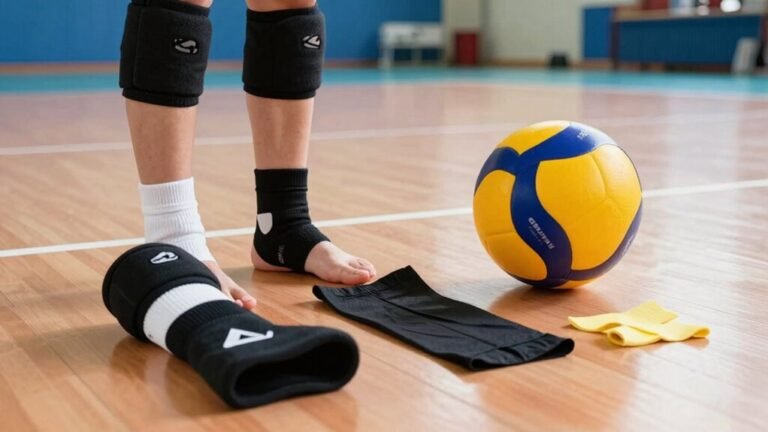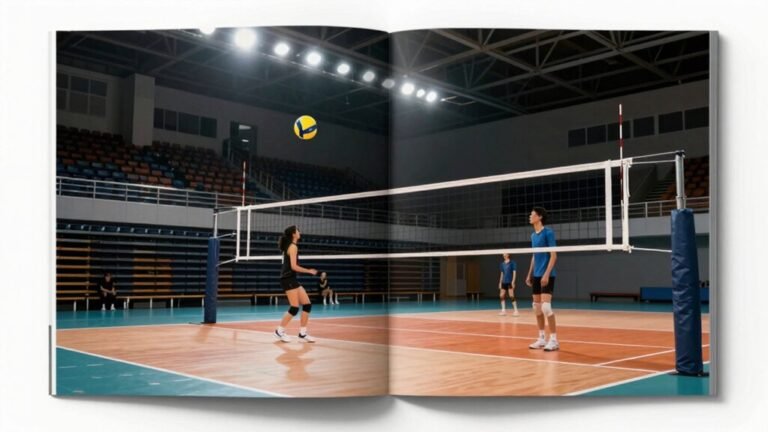



You’ll hit the court floor dozens of times each match—on your knees—whether you’re diving for a dig, scrambling for a save, or sliding into defensive position. Without proper knee pads, you’re risking painful bruises, floor burns, and potential joint damage that can sideline you for weeks. The challenge isn’t just finding any knee pad, though. You need the right combination of protection, mobility, and fit for your specific position and playing style.
Key Takeaways
- Measure thigh circumference 4–5 inches above kneecap and consult manufacturer sizing charts for proper fit without circulation restriction.
- Select high-density EVA foam (0.5–0.75 inches thick) with dual-density construction to absorb impacts while maintaining mobility.
- Choose sleeve length by position: 7–7.5 inches for liberos/defensive specialists; 5.5–6.75 inches for setters and hitters.
- Ensure central padding covers kneecap and extends one inch above and below patella to protect the patellar tendon.
- Look for breathable fabrics with mesh panels and 4-way stretch to wick moisture and prevent bunching during play.
Understanding the Critical Role of Knee Protection in Volleyball
Volleyball demands more from your knees than almost any other court sport. Every floor dive, slide, and emergency save puts intense pressure on your patella and surrounding joints. Without proper protective gear, you’re risking bursitis, contusions, and chronic inflammation that builds up over time. High-quality knee pads absorb and disperse these impact forces, protecting the structures that keep you playing season after season.
Beyond injury prevention, the right impact protection changes how you play. When you trust your gear, you’ll commit fully to defensive maneuvers instead of hesitating before a dive. That confidence translates directly into better performance on the court. Consistent use of suitable knee pads throughout a season helps preserve your long-term joint health and reduces the chance of acute injuries that could end your playing career early.
Choose pads with proven high-density foam padding and moisture-wicking fabrics to balance protection, comfort, and mobility during long matches.

Evaluating Padding Materials and Foam Density
Once you’ve decided to protect your knees, the next decision centers on what’s actually inside those pads. The foam material determines how well they’ll absorb impact and how long they’ll last. High-density EVA foam outperforms cheaper alternatives because it resists permanent compression through repeated dives. You’ll find superior protection with dual-density construction—a soft inner layer cushions your kneecap while a firm outer layer disperses impact forces.
High-density EVA foam with dual-layer construction delivers the best impact absorption and longest-lasting protection for competitive volleyball players.
Consider these key features when evaluating padding:
- Thickness of 0.5–0.75 inches balances protection with mobility for indoor play
- Multi-layer polymer construction maintains shock absorption longer than single-layer foam
- Contoured or segmented designs conform better to your knee’s natural shape
- Reinforced stitching protects foam edges from abrasion during floor slides
- Replacement after one to two seasons when foam feels permanently flattened
For longer-lasting support, look for pads that combine high-density foam with durable outer fabrics and reinforced seams to resist wear from repeated use and moisture, especially models featuring powder-coated steel frame attachment points for enhanced durability.
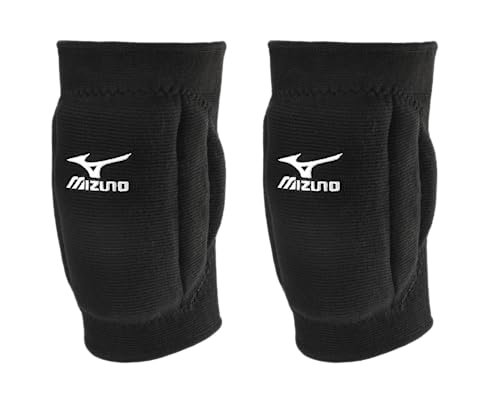
Protection: Mizuno volleyball knee pads feature high-density foam padding and advanced moisture-wicking sleeve technology for ultimate comfort during intense matches, training sessions, and competitive play on the court.

Size UP! X-Small/Small is intended for very young, typically pre-teen customers, and it runs very small. Teenagers and adults should consider choosing size M/L or larger.

Protection: These Mizuno volleyball knee pads deliver superior comfort with high-density foam padding and abrasion-resistant outer sleeve, making them perfect girls volleyball knee pads for intense games and tournaments.
Determining the Right Coverage Area for Your Position
Your playing position directly determines how much coverage you need because different roles demand distinct movement patterns and floor-contact frequencies.
Defensive specialists and liberos require maximum central padding with extended sleeves measuring 7–7.5 inches or longer, plus contoured wings for frequent dives and lateral slides.
Setters and hitters perform better with low profile sleeves around 5.5–6.75 inches featuring high-density foam that protects the patella without restricting knee flexion during jumps.
Regardless of position, make certain central padding aligns over your kneecap and extends at least one inch above and below the patella to shield the patellar tendon.
If you execute angled slides regularly, choose pads with wider profiles or side panels for lateral and medial coverage that reduces abrasion and edge impacts.
Also consider materials with breathable nylon/spandex blends and 4-way stretch for comfort and durability care to preserve fit and protection over repeated use.


Package Includes: you will get 1 pair of volleyball arm sleeves and 1 pair of volleyball knee pads, very suitable for volleyball games and other practices
Protection: Mizuno volleyball knee pads feature high-density foam padding and advanced moisture-wicking sleeve technology for ultimate comfort during intense matches, training sessions, and competitive play on the court.
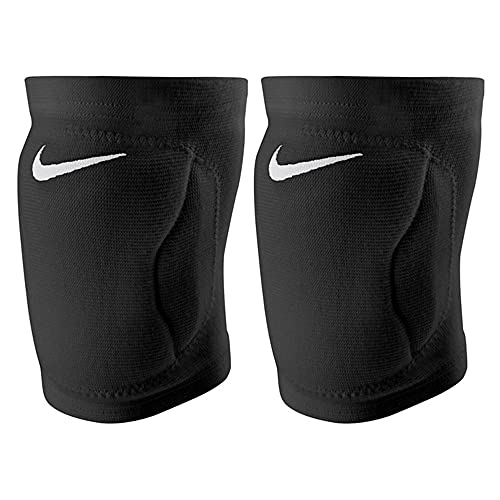
Size UP! X-Small/Small is intended for very young, typically pre-teen customers, and it runs very small. Teenagers and adults should consider choosing size M/L or larger.
Finding the Perfect Fit: Measuring and Sizing Guidelines
After selecting the right coverage for your position, accurate measurement becomes the foundation of pad performance.
To size knee pads correctly, measure your thigh circumference 4–5 inches above the kneecap and consult the manufacturer’s chart—generic sizes won’t deliver the secure fit you need. A proper pad feels like a “second skin,” snug enough to stay in place without pinching or restricting circulation.
Key fitting checkpoints:
- Measure precisely 10–13 cm above your kneecap using the brand’s size chart
- Test with squats to confirm the pad centers over your patella without rolling
- Choose sleeve length based on need: 6.75–7.5″ resists bunching; 5.5″ maximizes mobility
- Re-measure periodically after training or growth spurts
- Replace worn pads when foam compresses permanently or elasticity fades
When uncertain between sizes, choose larger for comfort. Many players also prefer backpacks with dedicated shoe compartments to keep gear organized when traveling to games.
Balancing Compression, Comfort, and Breathability
Breathability matters just as much. Look for nylon, polyester, or spandex blends with mesh panels to wick moisture and reduce heat buildup during long matches.
Seamless back panels or perforated zones let air circulate while maintaining support. If you’re choosing thicker padding—around 0.5 to 0.75 inches—balance that shock absorption with vented designs to avoid overheating.
Also consider fabrics with moisture-wicking and durable construction (high nylon/spandex ratios and reinforced stitching) to withstand dives and repeated washing.

Position-Specific Knee Pad Requirements
Because each volleyball position demands distinct movement patterns and contact levels, your knee pad choice should align with how you play on the court.
Position-specific knee pad recommendations:
- Liberos and defensive specialists need thick, high-density foam pads with maximum kneecap coverage and wider contoured wings to handle constant dives and floor contact
- Setters require slimmer, low-bulk designs that preserve jumping range and quick movements while maintaining high-density foam protection
- Hitters and blockers benefit from streamlined, pre-curved pads with thin profiles that won’t interfere with approach mechanics or vertical leaps
- Youth players should wear low-profile, dual-density models like ASICS Ace that fit snugly without restricting growth
- Team purchases often focus on durable, budget-friendly options such as Mizuno T10 Plus for general use, reserving the best volleyball knee pads for position-specific roles
Consider pairing knee pads with graduated compression socks or sleeves to improve circulation and aid recovery during long matches or tournaments.
Assessing Durability and Construction Quality
Durability separates knee pads that survive a season from those that fail after a few weeks of hard practice.
When evaluating the best knee pads, inspect the thickest part of the padding—it should contain high-density EVA foam, typically 0.5–0.75 inches thick. This material maintains shock absorption far longer than low-density foam that compresses quickly. Check for reinforced stitching at seams and abrasion-resistant synthetic coverings, since these details predict how well pads withstand repeated slides. Look for contoured designs with additional reinforcements like rubber panels or silicone absorbers that distribute impact and prevent localized wear. Quality sleeve materials—polyester, nylon, or elastane blends—retain elasticity better than cheaper fabrics. Competitive-grade pads typically last one to two seasons; replace them when foam feels permanently compressed or fabric shows fraying. For athletes concerned about injury prevention, consider combining knee pads with supportive ankle braces to reduce the risk of lower-limb injuries during play.
Comparing Top-Rated Volleyball Knee Pads
Narrowing down your choices becomes simpler when you focus on models that consistently earn high marks from competitive and recreational players alike. Each top-rated pad addresses specific needs, so matching features to your playing style makes certain better protection and comfort.
- Mizuno LR6 leads for competitive athletes with its slim Dynamotion Fit padding and 6.75″ sleeve that covers your entire patella during aggressive dives.
- Mizuno T10 Plus delivers reliable performance at around $17.99, blending 68% polyester, 20% rayon, and 12% elastic for budget-conscious teams.
- adidas Elite provides extra knee protection through a taller 7.5″ sleeve and sculpted 80% EVA foam with anatomical flex zones.
- Under Armour 3.0 locks in place via circular knit construction and dual-density EVA, minimizing mid-match adjustments.
- ASICS Ace™ Low Profile suits youth players with its compact 5.5″ sleeve and anti-odor technology at beginner-friendly prices.
Programs should also prioritize consistent training and clear safety protocols, including documented player safety procedures and regular assessments.

Size UP! X-Small/Small is intended for very young, typically pre-teen customers, and it runs very small. Teenagers and adults should consider choosing size M/L or larger.

SIZE GUIDE (NIKE FIT): XS/S (14–15.5"), M/L (15.5–17"), XL/2XL (17–18"). Measure around the thigh just above the knee for best accuracy.

adidas Unisex-Adult Elite Volleyball Kneepads
Maintenance Tips and When to Replace Your Knee Pads
Proper care extends the life of your volleyball knee pads and keeps them performing at their protective best throughout each season.
Inspect pads monthly for compression issues—replace them when the foam stays flat after pressure or feels uneven.
Wash sleeves on a gentle cycle using cold water and mild detergent, then air-dry flat to maintain elasticity and prevent shrinkage.
Rotate between at least two pairs during active seasons so foam can recover between sessions.
Check stitching after intense use; frayed seams or exposed foam mean it’s time for new pads.
Store them flat in cool, dry locations away from sunlight and heat.
Most pads last one to two full seasons with regular play, but heavy users may need replacements sooner.
Also make sure your cover includes essential gear for practices and tournaments so you always have backups and proper equipment.
Recent Posts
REP Soft Plyo Box 3 in 1 Foam Jump Box
ASICS Men’s Gel-Rocket 11 Volleyball Shoes
Volleyball Tryout Nerves: How Players Can Stay Calm and Confident
Frequently Asked Questions
How to Choose Knee Pads for Volleyball?
Measure your thigh 4–5 inches above the kneecap and consult sizing charts for a snug fit.
Choose high-density EVA foam (0.5–0.75 inches thick) for superior player comfort and shock absorption.
Defensive players need wider coverage, while setters benefit from slimmer designs.
Check brand comparisons for reinforced stitching and ventilation zones.
Test with squats to make sure they won’t slip during court maintenance or dives.
Replace pads when foam compresses permanently—quality pairs last one to two seasons.
Are Black or White Kneepads Better?
Neither color is objectively better for performance, but black knee pads hide stain visibility from court residue and sweat, keeping a cleaner look throughout the season.
White offers sharper color contrast with dark uniforms but shows dirt quickly, requiring more frequent washing.
Choose based on team aesthetics and league requirements first.
If you’re buying your own and no rules apply, black reduces maintenance hassle while maintaining a professional appearance game after game.
Is Gel or Foam Better for Knee Pads?
Foam—especially high-density or dual-density EVA—generally outperforms gel for defensive specialists.
While gel offers superior conforming comfort and localized impact absorption around your patella, it’s heavier and can bottom out after repeated dives. High-density foam disperses shock across a broader area, resists permanent compression longer, and delivers better material durability throughout the season.
You’ll sacrifice some initial cushioning softness, but you’ll gain structural protection and fewer mobility tradeoffs during extended play.
How Should Volleyball Knee Pads Be Worn?
You’ll want to focus on proper positioning by centering the pad directly over your kneecap, extending 1–2 inches above and below.
Adjust strap tension so the sleeve fits snugly—measure your thigh 4–5 inches above the knee—without cutting circulation.
For skin protection, choose moisture-wicking sleeves and smooth all seams flat.
Test with squats and dives to confirm they don’t slide or bunch behind your knee during movement.
Bottom Line
You’ve now got the knowledge to select knee pads that’ll protect you through countless dives and slides. Measure your thigh circumference 4–5 inches above your kneecap, choose padding thickness based on your position, and prioritize high-density EVA foam with reinforced stitching. Don’t forget to buy two pairs for rotation and replace them when the foam compresses. Your knees will thank you after every match.