

You want your daughter to love volleyball as much as you love watching her play. But here’s the challenge: your role isn’t always obvious, and it’s surprisingly easy to cross the line from supportive parent to added source of pressure. The difference between parents who help their athletes thrive and those who accidentally create stress often comes down to understanding a few key principles about boundaries, communication, and what “support” actually means in competitive sports.
Key Takeaways
- Aim for balanced involvement at roughly 72% of your child’s sports experience—avoid over-coaching or under-supporting.
- Follow the 24-hour rule: wait a day after games before discussing concerns, and let athletes address coaches first.
- Cheer for effort and team play from the sidelines rather than giving tactical instructions or individual performance feedback.
- Frame mistakes as learning opportunities and ask problem-solving questions to build resilience and mental toughness.
- Focus on long-term participation and character development instead of immediate results, playing time, or statistics.
Finding the Right Balance: Understanding Your Role in Your Child’s Volleyball Journey
When you watch your child step onto the volleyball court, you naturally want to support them—but finding the right level of involvement can be challenging. Research shows parental involvement exists on a spectrum, from under-involved to appropriately engaged to over-involved. The sweet spot? Parents who estimate their involvement at around 72% of their child’s sports experience while maintaining boundary setting with coaches and programs.
Role clarity matters noticeably. Appropriately involved parents create positive relationships between coach, parent, and athlete rather than causing conflict. You’ll know you’ve crossed into over-involvement if you’re sending frequent lengthy emails, coaching from the sidelines, or requesting repeated meetings. Meanwhile, under-involved parents increase the burden on coach-athlete relationships, often resulting in athletes who aren’t fully committed to the program.
Strong volleyball clubs maintain clear conflict resolution processes through signed player and family contracts that outline expectations from the start. This contractual approach helps parents understand boundaries while giving coaches the support they need to address issues consistently and fairly.

Establishing Open Communication With Coaches From Day One
Setting the stage for a successful season starts well before your child ever touches a volleyball in their first practice. Great volleyball parents establish clear communication patterns from the season kickoff, which prevents misunderstandings down the road.
Four foundational communication elements to establish immediately:
- Review the communication charter – Understand preferred contact methods and response timeframes (typically 48 hours for non-urgent matters)
- Study the expectations packet – Know playing time criteria and skill development benchmarks before the first tournament
- Learn the conflict protocol – Your athlete talks to the coach first before you get involved
- Respect boundaries – Wait 24 hours after games before discussing concerns, and never approach coaches on the sideline
These protocols protect your relationship with the coaching staff throughout the entire season. Many clubs with an open-door policy encourage parents to bring questions and concerns directly to leadership, recognizing that transparent communication builds stronger relationships even when feedback is negative.


Large in size (7” x 10”), this volleyball journal for coaches & players features 120 thick, no-bleed pages with full-color volleyball courts. Perfect for tracking volleyball rotations & volleyball drills. A must-have volleyball training equipment.

What to Do (and Not Do) During Games and Tournaments
Your behavior during games and tournaments has a measurable impact on your child’s performance and enjoyment of volleyball. Research shows 90% of athletes report improved confidence with positive parental cheering. Proper sideline etiquette means focusing on team effort rather than individual outcomes. Use supportive phrases like “I love watching you play” instead of tactical feedback. Sideline boundaries are vital—avoid coaching from the stands, which undermines your coach’s authority and confuses your athlete. During tough moments in a match, prioritize encouraging support over praise, as 60% of kids prefer parental cheering when they’re struggling rather than compliments after good plays.
| Do This | Not This | Why It Matters |
|---|---|---|
| Cheer for team effort | Coach from sidelines | Maintains clear authority structure |
| Say “Great hustle!” | Critique technique publicly | Athletes replay mistakes mentally already |
| Stay calm during play | React emotionally to calls | Models appropriate competitive behavior |
| Focus on enjoyment | Pressure about outcomes | 70% quit by age 13 due to parental pressure |
| Wait to discuss performance | Provide immediate tactical breakdown | Athletes need emotional processing time |


SPORTY PINK STATEMENT: A glowing volleyball and flowing Queen script give the wall a fun, player-inspired look, making this neon sign a standout piece for volleyball-themed room decor

DESCRIPTION: Material: Wood. Size: Approx. 3.94x3.94x0.1 inch / 10x10x0.25 cm. Made of good natural wood , laser cut and polished.

License Plate Dimensions: 6 x 12 inch (15cmx30cm)
Supporting Your Daughter’s Athletic Development Without Adding Pressure

Beyond game-day behavior, the everyday support you provide shapes how your daughter experiences volleyball throughout her athletic journey. Research shows highly skilled athletes consistently report moderate parental involvement—neither absent nor overwhelming. You’ll help her develop best by encouraging autonomy in decisions about club selection, position preferences, and training intensity. This approach builds confidence and ownership over her athletic path.
Four Ways to Support Without Pressuring:
- Provide emotional validation after tough losses without immediately analyzing performance
- Let her initiate conversations about volleyball rather than constantly bringing it up
- Avoid attending every practice session, which can create feelings of constant judgment
- Focus on character development and teamwork over statistics and playing time
Parents who view their time and financial commitment as an investment in the player’s future create a healthier framework for supporting their daughter’s volleyball journey.
Teaching Resilience: Helping Your Child Learn From Losses and Mistakes
When your daughter experiences a tough loss or makes a critical error during a match, how you respond in those moments greatly shapes her ability to bounce back stronger. Research shows that resilience directly correlates with superior technical-tactical skills and better adaptation to competitive stress. Help her develop a growth mindset by framing mistakes as learning opportunities rather than failures.
Female athletes particularly benefit from relationship-focused conversations during post-match evaluations. Guide her through emotional regulation by acknowledging both cognitive and somatic anxiety—the worried thoughts and physical tension she feels.
Ask specific questions: “What would you do differently next time?” This problem-solving approach builds mental resilience over time. Studies examining resilience across sport type differences have found that how athletes develop this mental toughness varies significantly depending on the specific demands of their discipline. Remember, resilience develops throughout her athletic career with consistent, supportive guidance from you.

Building a Strong Parent-Coach Partnership Based on Trust
Building trust between you and your daughter’s coach creates the foundation for her athletic success. This partnership works best when you establish clear communication from day one and respect each person’s role in your player’s development.
Four trust rituals that strengthen parent-coach relationships:
- Attend pre-season meetings to understand coaching philosophy, rotation systems, and playing time criteria before questions arise
- Schedule bi-weekly check-ins through designated communication channels rather than approaching coaches during practice or games
- Use conflict protocols by addressing concerns privately within 24 hours instead of venting to other parents
- Acknowledge coaching expertise by supporting technical decisions publicly, even when you disagree privately
When you follow these practices consistently, you’ll create an environment where your daughter thrives without conflicting messages from the adults guiding her. Great coaches ask themselves who they would trust their own child to play for, and you should use that same parental perspective to evaluate whether you’re being the kind of supportive parent a quality coach wants on their team.
Recognizing the Warning Signs of Burnout and Overtraining
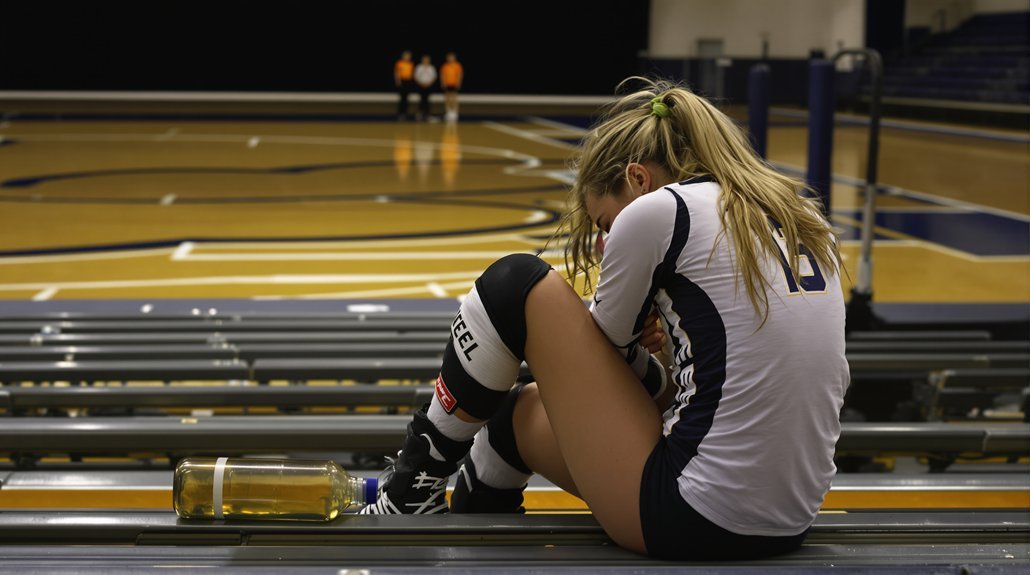
Your daughter’s love for volleyball can shift dramatically when the balance between training and recovery disappears. Early warning signs often appear subtly—persistent shoulder pain, declining grades, or unusual irritability. Workload monitoring becomes essential when she’s training more hours weekly than her age in years or participating on multiple teams simultaneously.
| Physical Signs | Performance Changes | Behavioral Shifts |
|---|---|---|
| Chronic shoulder pain from overhead swings | Decreased court performance despite effort | Loss of enthusiasm for practices |
| Persistent fatigue unrelieved by rest | Reduced concentration in games | Mood swings and irritability |
| Unexplained weight loss | Academic performance decline | Sleep disturbances |
Research shows pre-season injury rates reach 2.9% compared to 1.1% during regular season. If symptoms persist beyond two weeks, reduce training volume by 20% and make certain she gets eight hours of sleep nightly. Overuse injuries develop from repetitive musculoskeletal stress without sufficient recovery time between training sessions.
Encouraging Long-Term Participation in Volleyball and Sports
Sustaining your child’s volleyball journey requires shifting focus from immediate results to lifelong athletic engagement.
Recent participation metrics show volleyball’s remarkable growth—boys’ participation jumped 12.57% annually, reaching 95,972 athletes, while over 470,000 high school girls now play the sport.
Volleyball participation is surging nationwide, with nearly 100,000 boys and 470,000 girls now competing at the high school level.
These youth pathways continue expanding through new varsity programs in eight states and professional leagues creating clear development routes. Boys volleyball has achieved 51% growth over the past six years, making it one of only two boys sports to increase by more than 15% in that span.
Four strategies to encourage continued participation:
- Celebrate participation milestones beyond wins and losses, recognizing effort and improvement
- Explore multiple volleyball formats—club, school, beach, and recreational leagues
- Connect with emerging opportunities like LOVB’s development pathway from youth to professional levels
- Support age-appropriate progression that matches your child’s developmental stage and interest level
The goal is sustainable engagement, not early specialization.
Practical Ways to Show Support Beyond the Sidelines
Stepping off the bleachers doesn’t mean stepping back from your child’s volleyball experience. Your most meaningful support happens during quiet moments at home. Establish home rituals like post-game snacks or family dinners where volleyball isn’t the main topic. Schedule regular emotional check-ins to gauge stress levels and enjoyment. Research shows moderate parental involvement correlates with higher perceived competence in athletes.
| Support Type | Action | Frequency |
|---|---|---|
| Logistical | Equipment maintenance | Weekly |
| Emotional | Check-in conversations | 2-3 times/week |
| Financial | Tournament fees, gear | As needed |
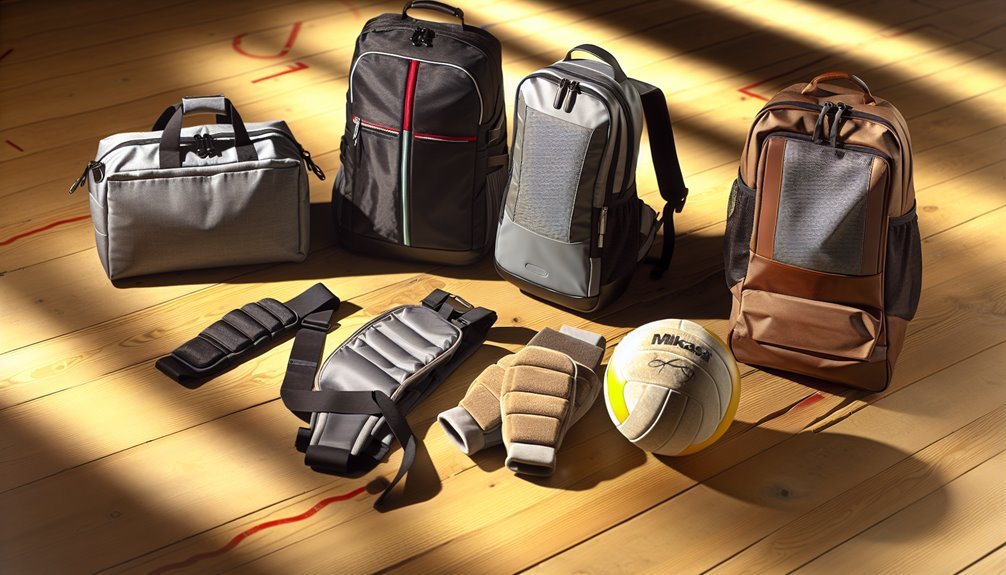
| Autonomy | Let athlete pack bag | Daily |
| Communication | Coach conferencing | Monthly or less |
These consistent, low-pressure touchpoints build stronger intrinsic motivation than constant performance discussions. Your presence matters more than your praise volume. When evaluating coaches, prioritize their ability to teach well and communicate effectively over playing credentials, as parents consistently rank instructional skills higher than competitive experience.

Bulk in Quantity: our package includes 12 pieces of volleyball snack bags crafted with careful consideration of quality and quantity; Sufficient quantity to meet the needs of most people, use them to wrap gifts and share happiness

Suitable for Volleyball Parties: these volleyball bucket party favor add a spirited touch to your events; With a pack of 24 bags in novel designs, offering an abundance to meet your softball party needs

Sufficient Package: You'll receive 60 volleyball snack bags for team, plenty of them and beautifully styled enough for your party, event, or daily use
Recent Posts
Frequently Asked Questions
How Much Should I Spend on Private Volleyball Coaching and Training?
You should budget $55–$85 per hour for private volleyball coaching in most markets, with training frequency of 1–2 sessions weekly.
Entry-level coaches charge $30–$50, while experienced instructors run $50–$80, and elite professionals exceed $90.
Group sessions reduce costs markedly—expect $40–$60 per person with four+ players.
Consider package deals for 10–20% savings if you’re committing to regular training throughout the season.
Should My Daughter Specialize in Volleyball or Play Multiple Sports?
Encourage your daughter to play multiple sports through high school. Research shows highly specialized volleyball athletes face 85% higher injury risk and reduced career longevity compared to multisport athletes.
Long term development benefits from skill diversification—94.4% of high school coaches confirm playing multiple sports improves overall athletic ability. She’ll develop better coordination patterns, reduce injury vulnerability, and maintain more participation options while still excelling in volleyball.
What Age Is Appropriate to Start Competitive Club Volleyball?
Ages 12-13 are ideal for starting competitive club volleyball. This timing allows your daughter to develop through skill clinics and recreational programs first, building fundamentals before facing intense competition.
If she’s interested in high school volleyball, she’ll need 6-18 months of experience beforehand. For college aspirations, starting by age 13 is essential for recruitment. Many clubs hold early tryouts in late summer, so plan accordingly and make sure she’s prepared.
How Do I Handle Conflicts Between My Child’s Teammates or Parents?
Address conflicts through clear communication with the coach first, scheduling a private conversation within 24-48 hours.
Practice boundary setting by keeping your child out of parent disputes and encouraging them to resolve teammate issues independently when minor.
If problems persist, request a mediation meeting with all parties present.
Focus discussions on specific behaviors rather than personalities, and always follow the team’s established conflict resolution procedures outlined in your initial contract.
Should I Hire a Sports Psychologist for My Young Athlete?
Consider hiring a sports psychologist if your athlete shows severe performance anxiety, trains over 17.5 hours weekly, or struggles with mental resilience during competition.
For most young volleyball players, you’ll get better results working with coaches who incorporate mental skills naturally. Start there first.
If specific issues persist—like debilitating nerves or burnout—then professional sports psychology becomes worthwhile.
Focus on building mental toughness through your coaching environment before seeking specialized help.
Bottom Line
Being a great volleyball parent means showing up consistently while stepping back when needed. You’ll make mistakes—every parent does—but your willingness to learn alongside your daughter matters most. Focus on the fundamentals: communicate respectfully with coaches, celebrate effort over wins, and prioritize your child’s well-being above trophies. When you balance support with healthy boundaries, you’re not just raising a better athlete—you’re helping develop a resilient, confident young person.