


Tryout nerves hit every player—even the ones who look calm warming up. Your heart races, your hands sweat, and suddenly that serve you’ve nailed a thousand times feels impossible. But here’s what most players miss: nerves don’t have to hurt your performance. When you know exactly where to put your attention and which thoughts to trust, anxiety becomes background noise instead of a roadblock. The difference comes down to three specific strategies you can practice this week.
Key Takeaways
- Replace negative thoughts with short, present-tense cues anchored to recent evidence, like “passed 8/10 reps in warm-up.”
- Practice 3–5 mental cues aloud during skill sessions, repeating each before every rep until they become automatic responses.
- Execute a pre-serve routine—breathe, pick a visual target, deliver—and use 3-second resets between points to maintain focus.
- Arrive early with gear packed, complete a brief physical warm-up, and visualize two perfect serves before tryouts begin.
- Practice skills under simulated pressure by starting drills at 20-20 and tracking objective metrics for concrete performance evidence.
Shift Negative Thoughts Into Realistic, Positive Self-Talk
Catching yourself mid-worry during volleyball tryouts isn’t easy, but it’s the first step toward replacing harmful self-talk with language that actually helps your performance. When “I’ll miss that serve” pops into your head, immediately counter it with “Breathe, watch the toss, make solid contact.” This builds mental toughness through repetition.
Volleyball players should write down their most common negative thoughts and cross each one out, replacing it with a short technical cue—transform “I can’t pass this” into “Platform steady, knees bent.” Keep statements present-tense and believable: instead of “I’ll ace every serve receive,” try “I know my footwork and I’ll execute it now.” Anchor your self-talk to recent evidence, like “I passed 8/10 reps in warm-up,” so your brain accepts it as fact. Coaches can reinforce this approach by using encouraging techniques that boost confidence without increasing pressure.


GREAT FOR SOLO TRAINING: 54 cards contain several volleyball drills. These include warmup, offense, defense and game insight exercises. Improve your technique, agility, and coordination.

Designed to help teens (ages 13-19) playing competitive indoor volleyball get to the next level whether it's a higher level club team, varsity high school team, or play for a college team
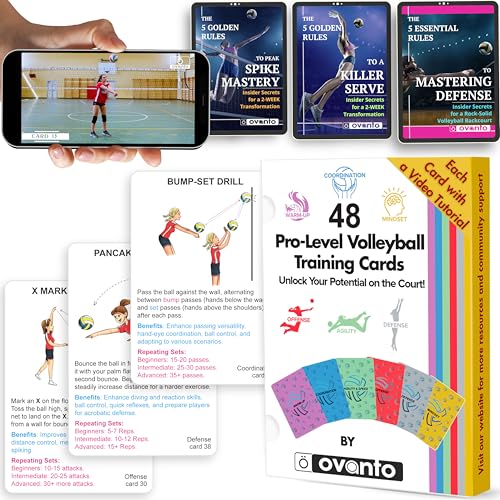
Master Volleyball Solo: With the OVANTO Pro-Level exercise equipment volleyball cards, enhance your warm-up, coordination, speed, defense, offense, & even mindset skills, all by yourself. Carry your personal coach in your pocket wherever you go.
Write Down and Rehearse Your Mental Cues Until They Become Automatic
Once you’ve identified your positive self-talk replacements, the real work begins: drilling those phrases until your brain fires them off without conscious effort.
Write 3–5 short mental cues on index cards—”low platform,” “breathe 2–2,” “see target”—and practice them aloud during 30–60 minute skill sessions.
Pair each cue with the exact movement: say “low platform” right before every pass in 50 consecutive reps so the phrase locks to the motor pattern.
Use spaced repetition by reviewing your cues quietly three times each morning and once before tryouts for two weeks.
During pressure drills—start scores at 20–20 or simulate deficit scenarios—force yourself to use the cues on every play.
When negative thoughts appear, write them down, cross them out, substitute a chosen cue, then rehearse that swap 20 times to build automatic recall.
Supporting young athletes’ mental wellness can improve performance and resilience, so integrate mental wellness practices into regular training routines.
Focus on What You Can Control During Tryouts
Your mental cues are now locked in through repetition, but tryouts will test whether you can deploy them when it matters most. The secret is to focus on the controllables: arrive warmed up, hydrated, and mentally prepared.
Before each serve, execute your pre-serve routine—take a breath, pick your visual target, and deliver. Research shows this consistency reduces performance variability by 30%.
Between points, use a 3-second reset: breathe deeply, say one positive phrase, and refocus on the next play. When coaches offer feedback, make one immediate, observable adjustment. Moving two steps left in serve receive demonstrates coachability better than any verbal response.
This approach keeps your attention anchored to specific tasks—calling the ball, stepping into your swing—rather than drifting toward outcome worries about making the team. Make a strong, lasting first impression by consistently demonstrating coachability through small, visible adjustments.

Use Pre-Tryout Preparation to Build Confidence
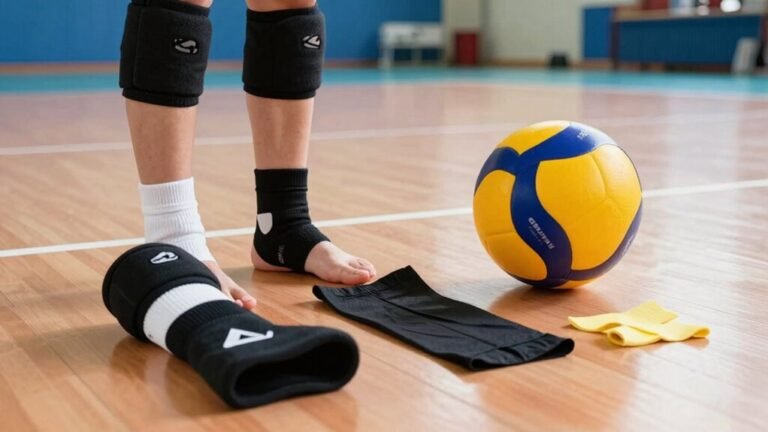
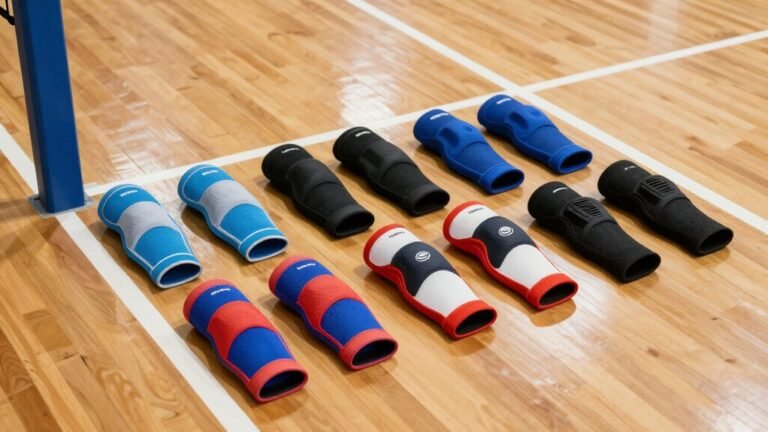
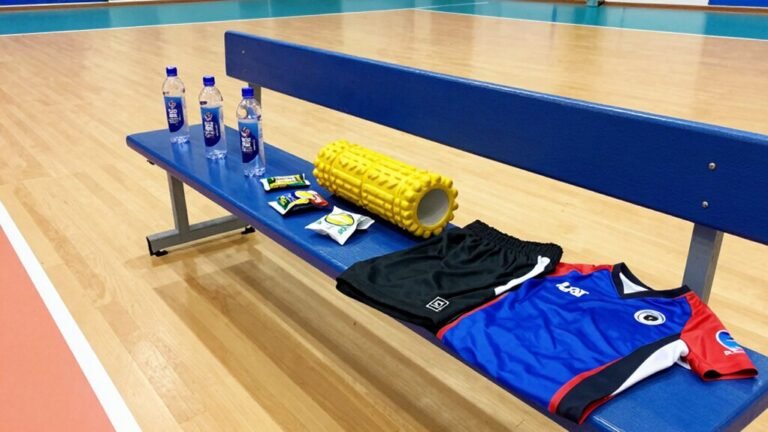
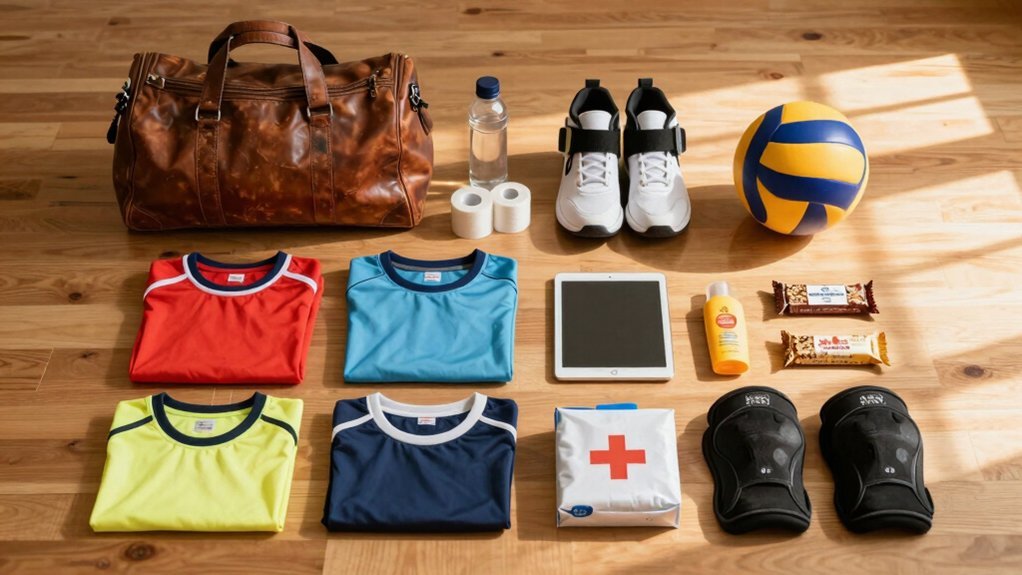
Preparation begins long before you step onto the court, and it’s one of the most reliable confidence builders you control. Pack your volleyball bag the night before—uniform, knee pads, water bottle, snacks, and paperwork—to eliminate morning stress.
Arrive 20–30 minutes early for parking, check-in, and a brief warm-up without feeling rushed. Run a simple pre-tryout routine: three minutes of deep breaths, leg swings, arm circles, and visualizing two perfect serves. This consistency signals your brain that you’re ready.
Practice key skills under pressure beforehand, like serve-receive drills starting at 20-20, so your body knows what it’s doing. Write down two execution cues—”platform to target” or “short toss, full swing”—and read them going to the gym. You’re making confidence through preparation. Make a checklist of what to wear and bring so nothing important is forgotten.
VOLLEYBALL REFEREE KIT: Outfit your volleyball official or volleyball coach with quite simply the best referee's bag in the market

Organized Gym & Shoe Storage: Features a dedicated shoe compartment (fits US Men's 8 / Women's 9) keeping dirty sneakers or flip-flops separate from clean clothes, making this gym backpack with shoe compartment perfect post-workout or for the court. Ideal track bag or track backpack

30L CAPACITY FOR DAILY NEEDS : The dimensions of TRAILKICKER basketball bag backpack for men women boys girls are 13.78"(L)x8.27"(W)x17.32"(H). It has 1x ball compartment, 1x shoes compartment, 1x main compartment, 1x small zipper pocket and 2x mesh pockets. The separate design of different compartments can store your items in partitions to make them more organized and clean
Practice Your Skills Under Pressure Before Tryout Day
Replicating the stress of tryouts during your practice sessions transforms nervous energy into familiar, manageable focus. When you practice with simulated pressure, you’re preparing both your skills and your mindset for game-day challenges.
Here’s how to build pressure into your training:
- Start games at 20-20 or down 20-16 to practice serve-receive and decision-making in high-stakes moments you’ll face during tryouts.
- Replicate tryout timing with 3–5 minute hitting rotations and only 15–30 seconds rest, training yourself to execute when fatigued.
- Add noise or music during serve-receive drills to maintain rhythm despite distractions.
Track objective metrics like targeted serve accuracy percentage or pass ratings out of 10. These numbers build evidence of your reliability and give you concrete confidence heading into tryouts. Club tryouts often follow a structured process that evaluates players across multiple skills, so focus on consistent, repeatable performance and tryout expectations to prepare effectively.


All-in-One Volleyball Gift Set – Includes a solo serve trainer, setting trainer, quality backpack, volleyball bracelet, and 50 fun stickers. A perfect gift for volleyball-loving teens!
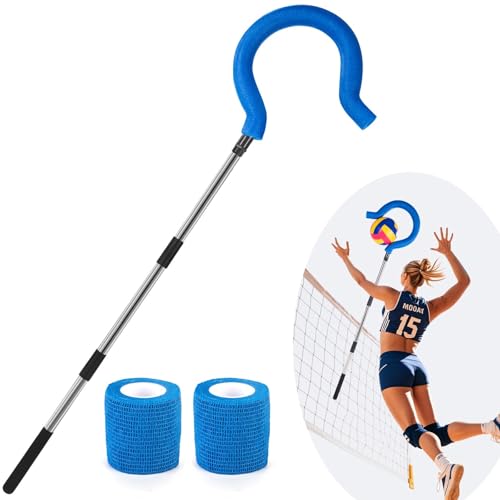
Professional Design for All Levels: The Volleyball Spike Trainer has been carefully designed (Patent pending) to accommodate players of any skill level, from beginners to experienced players. Its innovative design helps improve spiking technique faster, allowing for more effective training sessions — an excellent choice for youth volleyball players and teen girls looking to build confidence and precision.

Great Volleyball Gift:Focopot Volleyball Training Kit includes a ball pouch with retractable cord, an adjustable waistband, two hand straps, and a portable backpack, making it the perfect volleyball gift.
Trust Your Training and Commit Fully to Each Rep
Trusting your preparation means letting your body execute what you’ve already taught it through thousands of reps. Studies show distributed practice builds strong retention, so trust muscle memory when pressure hits. Before each attempt, use a pre-rep routine: breathe in for two seconds, exhale for two, set your feet. This three-to-five-second ritual reduces anxiety and stabilizes execution.
Focus on one technical cue per rep—serve to the seam, pass to target, arm swing high. Goal-directed attention beats vague worry. Commit to aggressive action rather than tentative corrections; biomechanics research confirms committed movements produce better contact than cautious ones.
Research on recognizing burnout shows early signs can be managed with routine adjustments and recovery strategies, so watch for reduced performance and respond early.
| Action | Purpose |
|---|---|
| Breathe 2s in, 2s out | Calm nerves |
| Set feet | Stabilize base |
| Choose one cue | Direct focus |
| Execute aggressively | Maximize contact |
| Reset 2 seconds | Prevent rumination |
Frequently Asked Questions
How to Not Be Nervous for Volleyball Tryouts?
Focus on controllable cues rather than outcomes.
Practice breathing techniques—three to five deep breaths—before each drill to steady your nerves.
Use visualization drills by picturing yourself completing successful passes or serves.
Establish pregame rituals like packing your gear the night before and reviewing past wins you’ve recorded.
Remind yourself that nerves are just energy you’ll channel into decisive movement.
Commit to one clear intent per rep instead of worrying about mistakes.
How to Calm Your Nerves Before a Tryout?
Start with breathing drills—inhale for four seconds, hold four, then exhale for six to eight—to slow your heart rate.
Next, use visualization rehearsal by mentally walking through perfect passes and serves for two to three minutes.
Finally, try progressive muscle relaxation: tense each muscle group for five seconds, then release.
These three techniques work together to calm your body and sharpen your focus before you step on the court.
Recent Posts
How to Stand Out in a Volleyball Tryout?
Stand out by using mental imagery before each drill—visualize your platform angle or approach path for two seconds. Show leadership cues: call “mine” loudly, encourage teammates between reps, and sprint to retrieve balls. Demonstrate practice consistency by executing fundamentals the same way every time—same footwork on serve-receive, same arm swing mechanics. Coaches notice players who prepare mentally, communicate actively, and repeat good habits under pressure.
How to Be More Confident When Playing Volleyball?
Build confidence through deliberate mental preparation: spend 5 minutes before each practice visualizing yourself executing perfect passes and serves.
Your body language signals belief—stand tall, shoulders back, and move decisively between plays.
Use skill visualization to rehearse successful reps in your mind, reinforcing the neural pathways you’ve already built in training.
Replace doubt with evidence: remind yourself of specific successful drills you’ve completed rather than dwelling on mistakes.
Bottom Line
Tryout nerves won’t disappear completely, but you’ve got the tools to manage them. Lock in three mental cues during warm-ups, stick to your pre-serve routine, and focus on one skill at a time. When a negative thought surfaces, replace it immediately with a specific, believable reminder from practice. Show up prepared, make quick adjustments, and trust what you’ve trained. You’re ready—now go prove it.