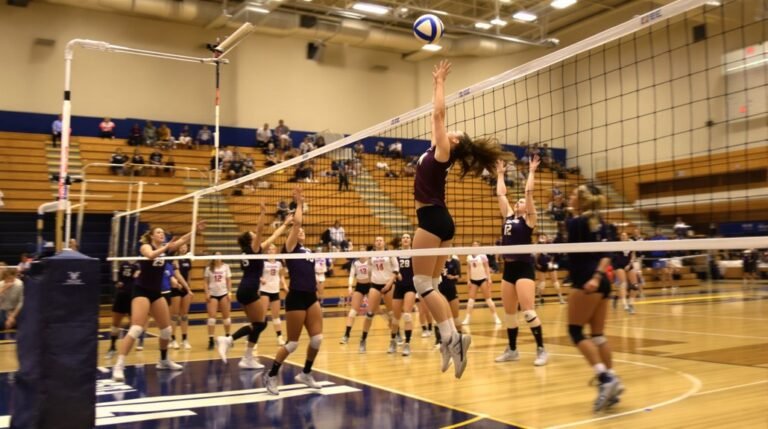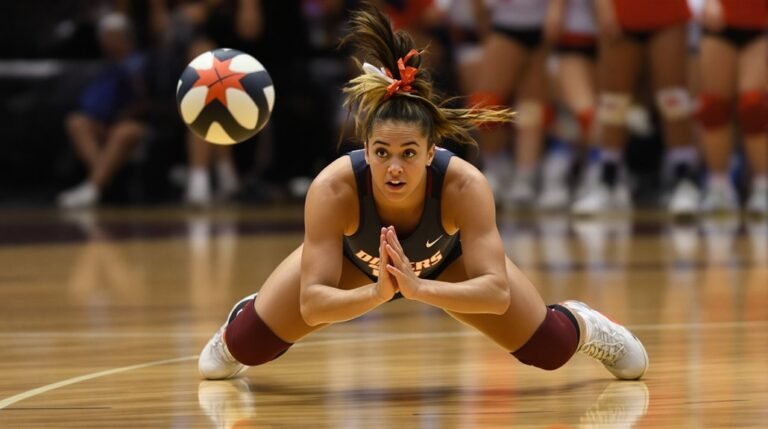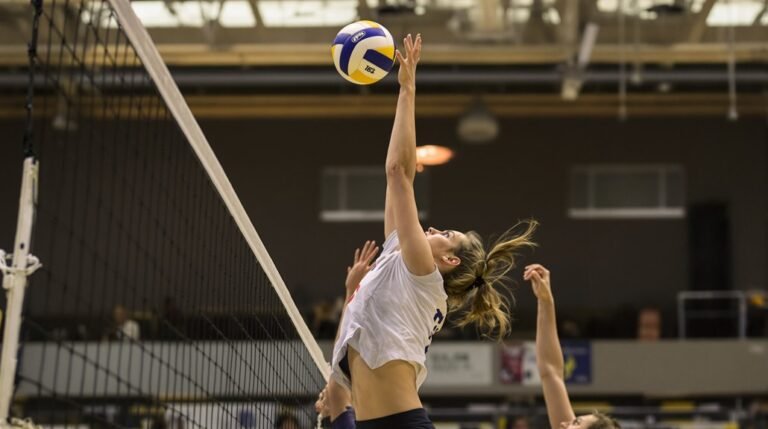


If you’ve watched your child’s volleyball game and wondered why one player wears a different colored jersey, you’ve spotted the libero. This specialized position handles the toughest defensive plays and can substitute freely without coach approval—a rule that confuses many parents at first. Understanding what the libero actually does will help you appreciate the quick exchanges happening on court and recognize when your athlete makes a game-saving play.
Key Takeaways
- The libero wears a different colored jersey and specializes in defense, playing only in the back row.
- They handle most serve receptions and dig hard-hit balls to keep rallies alive for the team.
- Liberos cannot block, spike above the net, or play in front-row positions during a match.
- They can swap in and out unlimited times without counting against the team’s substitution limit.
- Look for the player in the contrasting jersey who stays behind the 10-foot line and directs teammates.
What Is a Libero in Volleyball?
Every volleyball team has one player who stands out the moment you look at the court—the libero wears a jersey that’s a completely different color from everyone else’s. This contrasting-colored jersey makes them easy to spot, and there’s a good reason for it.
The libero is a defensive specialist who plays exclusively in the back-row. You won’t see them jumping at the net to block or attack. Instead, they focus on serve reception and digging hard-hit balls. Teams can designate one or two liberos per match.
Here’s something important to know: a libero can set the ball, but only from behind the 10-foot line if a front-row hitter wants to attack above the net.

Key Responsibilities of the Libero on the Court
On any given rally, the libero shoulders three core jobs: receive serves cleanly, dig attacks, and keep the ball alive when plays break down.
The libero’s mission is simple: receive, dig, and rescue—keeping every rally alive from the back row.
As your team’s back-row defensive specialist, you’ll spot the libero immediately by their contrasting jersey. This player typically handles 60-70% of serve reception duties, positioning in the left-back or middle-back zones to give the setter a quality first pass.
Digging is equally critical. When opponents attack, the libero reads hitters, stays low, and uses quick platform adjustments to pop hard-driven balls back into play.
You’ll also see them chasing down tips and deflections that would otherwise hit the floor.
On broken plays, the libero can even set teammates—just not front-row hitters from inside the 10-foot line.
Libero Rules Every Parent Should Know
Because the libero follows unique rules that differ from every other player, understanding these regulations helps you follow matches and support your child’s development.
First, you’ll spot the libero immediately by their contrasting-colored jersey. This distinctive color helps referees track their replacement privileges throughout the game. A team can designate two liberos on the roster, though only one plays at a time.
The libero is restricted to back-row play and can’t block or attack above net height. If they set the ball with an overhand pass while standing in front of the 10-foot line, teammates can’t complete an attack above the net.
Here’s a key detail: libero replacements don’t count against your team’s substitution limit. They happen during dead balls, allowing flexible defensive rotations without penalty.


A long sleeve volleyball jersey with CLIMACOOL to keep you cool, dry and ready.

Volleyball Libero Position design. Fun Volleyball gifts for teen girls who are volleyball lovers! The perfect gift for any girl volleyball players or volleyball enthusiast. Volleyball Players Libero shirt.

Volleyball Player Position design. Of Course I Get Defensive I'm A Libero
Why Teams Use a Libero Instead of Regular Substitutions
While regular substitutions give coaches flexibility, they come with a strict limit—most levels allow only six per set. That’s where the libero becomes indispensable.
Because libero replacements don’t count toward those six substitutions, coaches can freely swap their best passer into the back row whenever needed. This typically happens when middle blockers rotate to defense—players known more for blocking than defensive skills.
The libero simply runs on during any dead ball, no paperwork required. Their contrasting jersey helps referees track these unlimited exchanges without confusion.
This system preserves your team’s regular substitutions for strategic front-row changes, like bringing in an extra hitter during pivotal points. You get specialized back row defense without sacrificing tactical options elsewhere. It’s efficient roster management that keeps your strongest defenders on the court longer.

A short sleeve volleyball jersey with CLIMACOOL to keep you cool, dry and ready.

A lightweight volleyball jersey with CLIMACOOL to keep you cool, dry and ready.

A long sleeve volleyball jersey with CLIMACOOL to keep you cool, dry and ready.
Skills That Make a Great Libero
The libero position demands a specific skill set that goes beyond general athleticism. Your child needs to be an exceptional passer first and foremost. Most teams expect their libero to deliver accurate passes on 70-80% of serve receptions—that’s a high bar.
Digging requires quick reads and low body positioning. Great liberos anticipate where hitters will attack and get there before the ball arrives. This takes superior footwork and court coverage, often requiring rapid lateral slides across 15-20 feet of backcourt space.
Bump-setting matters too. When the setter can’t reach the ball, liberos must deliver hittable sets from the back row. They’re also vocal leaders who direct traffic, calling out coverage assignments and keeping teammates organized during fast-paced rallies.


Versatile Volleyball Training Equipment: Enhance your volleyball skills with this versatile training equipment. Perfect for improving timing, speed, and power in your hitting approach, while also targeting key muscle groups including arms, shoulders, chest, back, legs, and more

PATENT PENDING volleyball setter trainer equipment.

Experience Unmatched Versatility with Apex Sports: Our 7x4 ft Volleyball Rebounder Net is a game-changer for players looking to elevate their skills. With a massive 28 square feet of rebounding surface, it's perfect for practicing various shots. The adjustable angles feature allows players to simulate real-game scenarios, enhancing training effectiveness. Whether you're a beginner or a pro, this net is designed to cater to all skill levels, making it an invaluable addition to your training regim
How to Spot the Libero During Your Child’s Game
Spotting the libero on the court is actually one of the easiest tasks you’ll have as a volleyball parent. Look for the player wearing a contrasting-colored jersey—they’ll stand out immediately from their teammates. You’ll typically find them positioned at left-back or middle-back, serving as the team’s primary passer/defender.
| What to Watch For | What It Means | Where to Look |
|---|---|---|
| Different jersey color | Identifies the libero | Anywhere on court |
| Back-row position only | Cannot play front row | Behind the 10-foot line |
| Frequent substitutions | Can substitute freely | During dead balls |
| No blocking or attacking | Rule restrictions | Near the net |
| Extra setting duties | Setter-out situations | Back court area |
The libero enters and exits multiple times per rotation without counting against team substitutions.
Frequently Asked Questions
What Is the Main Role of a Libero in Volleyball?
A libero’s main role is to serve as your team’s defensive specialist, handling serve receive and providing reliable court coverage in the back row.
You’ll use sharp passing technique to deliver accurate first balls to the setter.
Through rotational substitution, you can enter for any back-row player without using a regular sub.
Libero communication keeps teammates organized, calling out plays and directing traffic on defense.
What’s so Special About a Libero?
A libero stands out because you’ll spot them instantly—their jersey contrast makes them unmissable on the court.
As a defensive specialist and digging expert, they’re your team’s backcourt leader who reads attackers and saves points others can’t.
They serve as the passing anchor on serve receive and work as a substitution specialist, swapping in and out freely without using team subs.
That flexibility keeps your best defender on the floor constantly.
Recent Posts

ASICS Men’s Upcourt 6 Volleyball Shoes
Park & Sun Sports Spectrum Classic
What’s the Hardest Volleyball Position?
Most coaches consider the setter the hardest position. You’re fundamentally the court captain, directing every offensive play while making split-second decisions under pressure.
The mental resilience required is intense—you’ll touch the ball nearly every rally. While positions like libero demand extreme reaction speed and physical demands, setters need positional versatility plus high training intensity.
It’s the ultimate blend of mental and physical challenge.
What Age Does Libero Start?
Most leagues introduce the formal libero position around ages 12–14, though rule variations exist by competition levels.
You’ll want to check your local age guidelines since some youth programs use a “defensive specialist” earlier.
For skill progression, coaches typically wait until a player shows consistent passing and court awareness—usually after a season or two of early training.
Don’t rush youth specialization; adjust parent expectations and let development happen naturally.
Bottom Line
Now you’ve got the essentials. When you’re watching from the stands, you’ll easily spot that different-colored jersey darting across the back row. You’ll understand why your child’s coach keeps subbing that player in and out without burning through substitutions. The libero isn’t flashy, but they’re absolutely essential. Next game, pay attention to those clutch digs and precise passes—you’ll appreciate the position even more.