

If you’ve ever watched a volleyball match and wondered who’s constantly jumping at the center of the net, you’ve spotted the middle blocker. This position demands a unique combination of height, explosiveness, and split-second decision-making that sets it apart from every other role on the court. Understanding what middle blockers actually do reveals why coaches consider them the defensive anchor—and why their offensive weapons are trickier than they first appear.
Key Takeaways
- Middle blockers serve as the defensive anchor at the net, using height and explosive jumping to block opponents’ attacks across the middle third.
- They run quick attacks like 1-sets and slides close to the setter, requiring precise timing and fast approaches to exploit defensive gaps.
- Their blocking footwork includes shuffles, crossovers, and explosive jumps with arms penetrating over the net and palms angled to deflect attacks.
- Middle blockers must read setter hands and anticipate quick attacks, requiring sharp game IQ and constant communication with teammates.
- Their offensive presence pulls opposing blockers toward center court, creating opportunities for outside hitters on both sides of the net.
What Is a Middle Blocker in Volleyball?
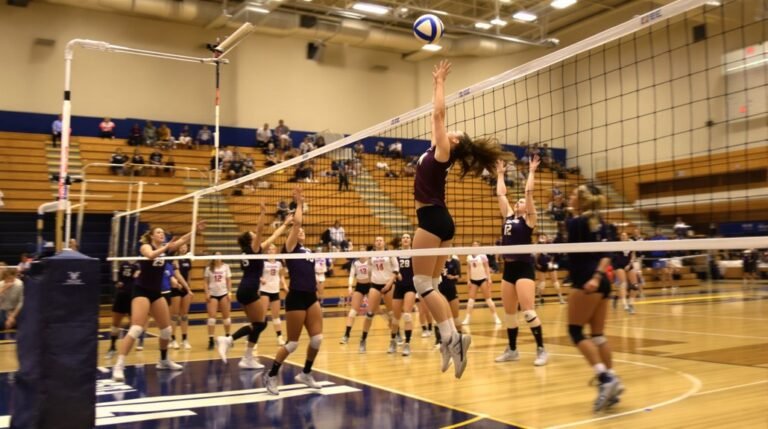
A middle blocker stands as the defensive anchor at the center of the volleyball net, responsible for protecting that crucial one-third of the court against opposing attacks.
You’ll often hear this position called middle hitter, reflecting the dual offensive and defensive role these players fill.
As a middle blocker, you’re typically one of the tallest players on your team.
Height matters, but it’s not everything.
You need explosive vertical jump ability, quick lateral movement, and sharp reflexes to read opposing hitters.
Your blocking footwork determines your success at the net.
You’ll use three-step crossover patterns or quick one-step movements to close gaps and form solid blocks.
Staying low in an athletic ready position lets you react instantly when the setter delivers the ball.

Physical and Mental Traits of an Effective Middle Blocker
Standing tall at the net gives middle blockers a natural advantage, with most elite players reaching 6’3” or taller and possessing vertical jumps that let them penetrate well above the net.
Height and leaping ability give middle blockers the edge they need to dominate above the net.
You’ll need explosive power to close blocks from antenna to antenna in under a second.
Beyond height, successful middle blockers develop these essential traits:
- Lateral quickness for executing one-step, two-step, and crossover footwork patterns across the net’s middle third
- Sharp game IQ to read the setter’s hands and anticipate whether you’re facing a quick set or slide attack
- Mental resilience to recover quickly after each high-pressure play and communicate adjustments with teammates
You can’t just be tall—you’ve got to combine physical tools with smart, disciplined decision-making every single rally.
The Middle Blocker as an Attacker
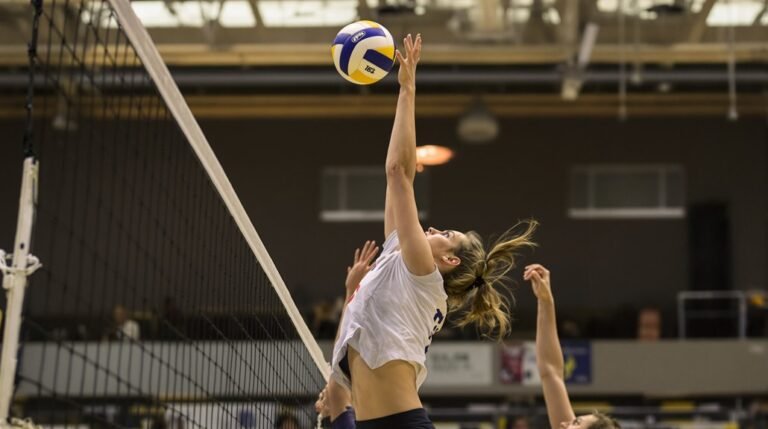
While those physical and mental tools make you a wall at the net, they’re equally valuable when you become the weapon on offense. As a middle blocker, you’re the team’s primary quick attacker, running 1-sets just inches from the setter’s hands. These lightning-fast plays create early offensive pressure before the opposing block can react.
Your middle attacks force defenders to cover the entire net width. You’ll exploit gaps between left and right-side blockers, finishing swings just above the tape for maximum effectiveness. Timing is everything—you’ll take short approaches from your home base position and coordinate precisely with your setter’s tempo.
Here’s the bonus: when you attack consistently, you pull opposing blockers toward the center. That opens one-on-one opportunities for your outside hitters.

Types of Middle Attacks: The 1-Set, 31-Set, and Slide
Because you’ll attack from the center of the net, you need a toolkit of quick plays that keep opposing blockers guessing.
Speed and unpredictability are your greatest weapons—master multiple quick attacks to keep blockers off balance.
Each attack creates different problems for the defense, and mastering all three makes you nearly impossible to stop consistently.
- 1-set: You’ll attack the ball almost directly above the setter’s hands, timing your jump so you’re already in the air when the set arrives. Speed beats the block here.
- 31-set: This pushes the attack a few feet toward the left antenna, forcing blockers to commit or chase. You’ll use the same quick tempo but cover more ground.
- slide: You’ll run laterally toward the right antenna and attack off one foot, stretching the block horizontally and opening angles the defense can’t easily cover.

All-in-One Volleyball Gift Set – Includes a solo serve trainer, setting trainer, quality backpack, volleyball bracelet, and 50 fun stickers. A perfect gift for volleyball-loving teens!

The Attack Volleyball Machine extends over the men's net height with a ball release point ranging from 6 ft. to 9 ft, 3 in.

Great Volleyball Gift:Focopot Volleyball Training Kit includes a ball pouch with retractable cord, an adjustable waistband, two hand straps, and a portable backpack, making it the perfect volleyball gift.
Defensive Responsibilities and Court Coverage
Once you’ve attacked, your job shifts immediately to defense—and as a middle blocker, you’re responsible for protecting the middle one-third of the net. You’ll read the setter’s hands and body position to anticipate where the ball’s going. A middle blocker must commit early on quick attacks while staying ready to assist teammates on outside hits.
To move laterally across the net, you’ll use shuffle steps, crossover footwork, or quick hop patterns to cover the full nine-meter width. Start in a low, balanced stance about 1.5 to 2 feet from the net with bent knees. This position lets you explode upward and penetrate over the net with locked arms angled at 45 degrees. Communication with your back-row defenders keeps everyone positioned correctly.

Essential Footwork Patterns for Middle Blockers
Your ability to cover ground quickly depends on mastering a few key footwork patterns that work for different game situations.
The three-step crossover gives you the best balance of speed and control. You’ll take a big driving step, cross over, then hop to square your shoulders before jumping.
For longer distances when you’re sprinting to reach an outside set, the one-step crossover sacrifices small adjustments for maximum reach.
When you only need minor positioning tweaks, shuffle steps keep you square to the net.
Here’s when to use each pattern:
- Three-step crossover for moderate lateral distances with controlled blocking
- One-step crossover when covering the longest horizontal gaps fast
- Shuffle steps for short adjustments when timing allows

Breathable mesh underlays

Breathable mesh upper

Fit note: This style runs small for some customers. You may prefer to size up a half size.
Blocking Techniques and Hand Positioning
When you’ve moved into position using the right footwork, your blocking technique determines whether you stuff the ball or watch it fly past your hands.
As a middle blocker, jump and extend both arms straight over the net with locked shoulders. Your goal is penetration over the net, not just reaching high. For proper hand positioning, keep your palms firm and tilted about 45 degrees with thumbs pointing toward your fingers, aligned with your shoulders. This creates a solid surface that directs the ball downward.
Here’s a key detail: use independent hand positioning. Drop your inside hand about 30 degrees while keeping your outside hand higher to take away seam and cross-court angles. Never slap at the ball. Keep your hands still and strong at contact, and track the hitter’s arm swing to adjust your angle.

PROTECTS FROM BRUISES & BURNS: Protection for volleyball players that dive for the ball. These volleyball palm sleeves provide protection from floor burns and bruises for any volleyball player

Enhanced Spike Velocity: Different resistance levels let you choose the perfect training intensity for a consistent, powerful wrist snap
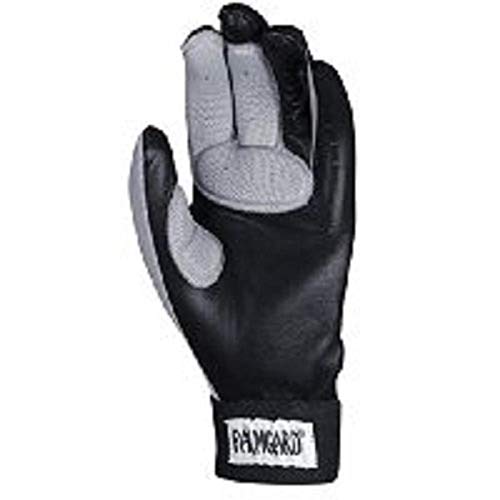
Shock absorbing cushions cover the critical areas of the index finger and upper palm
Communication and Team Coordination at the Net
At the heart of every successful block, you’ll find constant communication between the middle blocker and teammates.
Before each serve, you’re calling out the opposing setter’s position and identifying likely hitters.
Right after the pass, you update that read so everyone aligns their blocking assignments correctly.
During rallies, you’ll signal whether you’re playing “up or soft” at the net.
This tells outside blockers how to position their shoulders and shape their hands.
Key communication responsibilities include:
- Calling block type and timing (“three-step,” “slide,” or “solo”) so teammates know whether to commit or peel
- Giving quick post-play feedback like “ball in,” “tool,” or “line” to help defenders adjust
- Maintaining brief verbal cues with your setter (“one,” “31”) to sync fast-tempo attacks
Frequently Asked Questions
Recent Posts

How to Help Your Child Build Confidence in Volleyball
How to Thrive During Long Volleyball Tournament Days
Preventing Common Volleyball Injuries
What Is the Easiest Position in Volleyball?
If you’re new to volleyball, you’ll likely find the libero or defensive specialist position easiest to learn. You won’t worry about rotational positioning at the net or serving responsibilities in some leagues. Instead, you’ll focus on passing and digging.
Defensive shifts become your specialty. Your quick reflexes matter more than height here. It’s a great way to contribute immediately while building fundamental skills.
What Is a Middle Blockers Job in Volleyball?
Your main job as a middle blocker is read blocking—you’ll watch the setter’s hands and body to predict where the ball’s going, then move quickly to help seal the net.
On offense, you’ll run quick attacks like the 1-set and slide offense to keep opposing blockers guessing.
You’re the defensive anchor in the middle third of the net and a fast-tempo scoring threat.
Where Do You Put the Weakest Player in Volleyball?
You’ll want to place your weakest player in the back row, typically in zone 1 (right-back), where they’ll have fewer passing and blocking demands.
During serve receive, position them deeper in zone 6 to avoid short serves.
Consider using libero rotation to sub them out of front-row positions entirely.
Your serving strategy should target opponents’ weak spots—not expose your own.
Is Middle Blocker the Hardest Position?
Yes, middle blocker ranks among the hardest positions you’ll play. You’re responsible for tempo control at the net, which means reading the setter and reacting in under a second.
The physical demands are intense—you’ll jump more than any other player during a match. Your decision making must be instant: commit to the quick set or slide outside? There’s no margin for hesitation.
Bottom Line
You’ve now got a solid foundation for understanding what makes middle blockers so valuable on the court. Whether you’re closing blocks, running quick attacks, or coordinating with teammates, every skill builds on the fundamentals covered here. Start by perfecting your footwork patterns, then layer in blocking technique and timing. With consistent practice and clear communication, you’ll become the defensive anchor your team needs at the net.