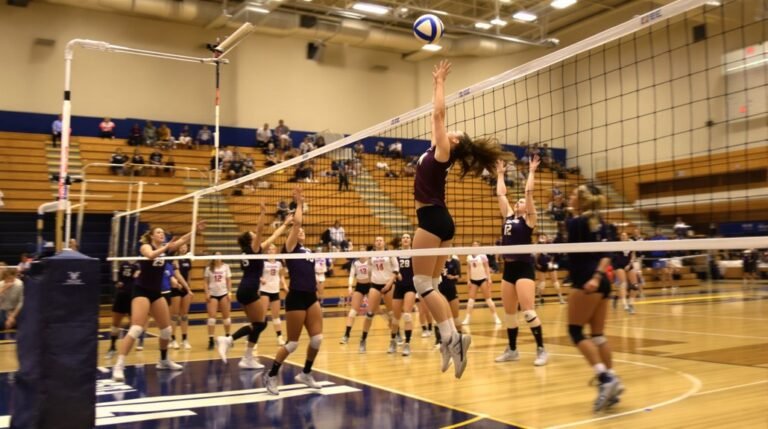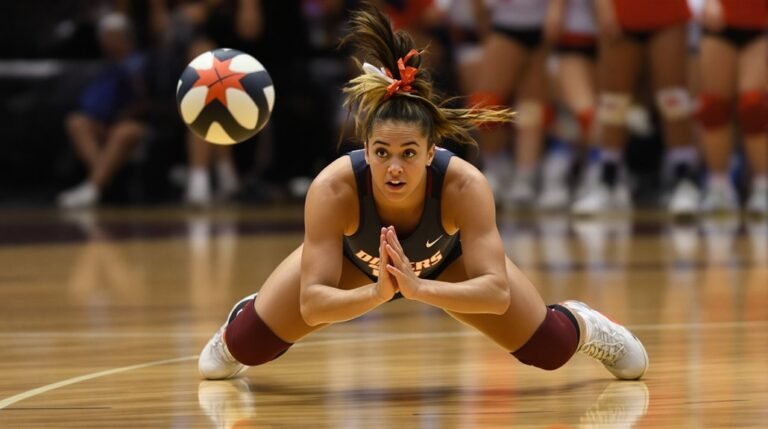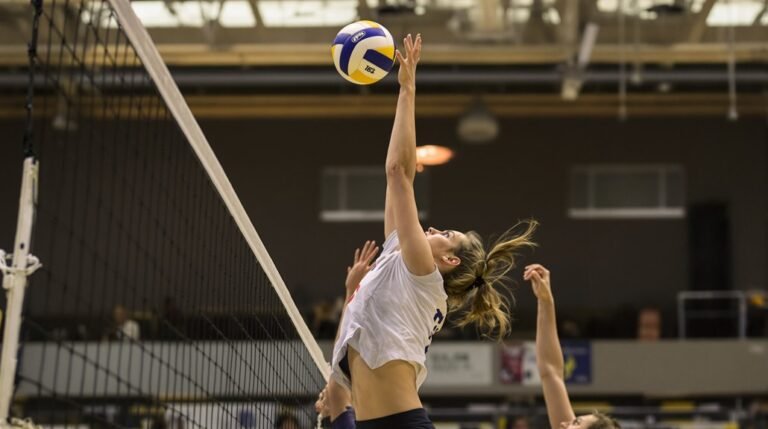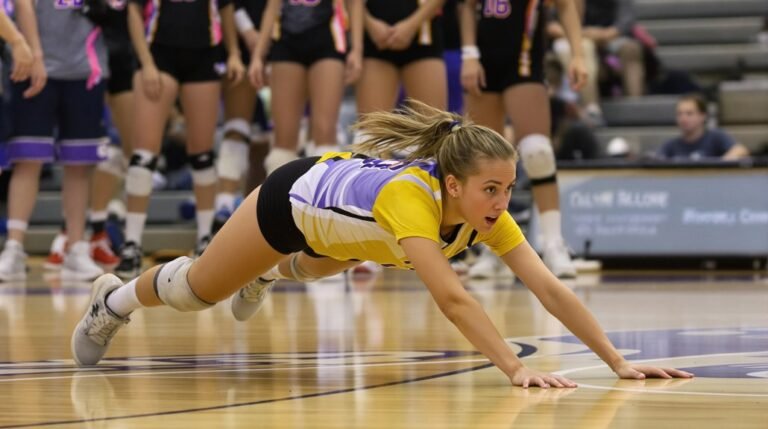


If you’ve ever watched a volleyball match and wondered who’s running the offense, you’ve likely been watching the setter. This position touches the ball more than anyone else on the court—often 50 or more times per game. They’re the quarterback of volleyball, making split-second decisions that determine whether an attack succeeds or falls flat. Here’s what you need to know about this critical role.
Key Takeaways
- The setter controls the entire offense by taking the second touch and delivering precise fingertip sets to hitters.
- Setters must read blockers and make split-second decisions to find defensive gaps and choose the right set type.
- They use specialized footwork like split steps and cross-steps to position themselves behind the ball quickly.
- Setters call plays, direct teammates using voice and hand signals, and control the team’s offensive tempo throughout matches.
- Beginners should master the “dish” hand shape with thumbs up and fingers spread wide for proper ball control.
The Setter’s Role: Why Every Team Needs a Playmaker
On every volleyball court, one player quietly controls the entire offense—the setter. Think of this position as your team’s playmaker, the person who touches the ball more than anyone else during a match. You’ll take the second touch after a pass and deliver precise fingertip sets to your hitters.
Your job requires quick footwork to get into position and sharp decision-making under pressure. You’re constantly reading blockers, especially the middle, to find gaps in the defense. You’ll choose between set types—quick, high, or slide—based on what you see in that split second.
Communication matters just as much as technique. You’ll call plays, direct your teammates, and control the offensive tempo. Without a strong setter, even talented hitters struggle to score consistently.

Essential Skills Every Volleyball Setter Must Master
Now that you understand the setter’s role, let’s look at the specific skills you’ll need to develop.
Setting Technique
As a volleyball setter, you’ll master fingertip sets using a “dish” hand shape. Contact the ball on your finger pads for 0.2–0.5 seconds—long enough to control trajectory, short enough to avoid carries.
Footwork Patterns
You’ll use split steps, V-steps, and cross-steps to position your hips behind the ball. This creates consistent sets within a 60–90 cm target window for hitters.
Reading the Block
Watch the middle blocker’s position and outside hitter’s approach. You’ll choose set types—quick, high, slide, or dump—in under a second.
Physical Foundation
Build wrist and finger strength through progressive weighted-ball training. Strong communication with hitters through voice and hand signals completes your toolkit.

Multi-Skill Training Volleyball Setter Net: With an overall size of 2.2 ft (W) × 3.7 ft (L) × 10.8 ft (H) and height adjustable from 6.4 to 10.7 ft, this volleyball setter training net is built to enhance serving, spiking, and ball control. Suitable for all skill levels—from beginners to advanced players—volleyball training is perfect for solo practice or team drills, indoors or outdoors. Sharpen your technique anytime, anywhere

WEIGHTED TRAINING VOLLEYBALL:The NEOGOAT Weighted Volleyball is an official size 5 volleyball, weighing 1.1LBS, designed specifically for volleyball training. Its heavy design enhances strength training for arms, shoulders, and wrists, making it perfect for setters, rebounders, and setting trainers.
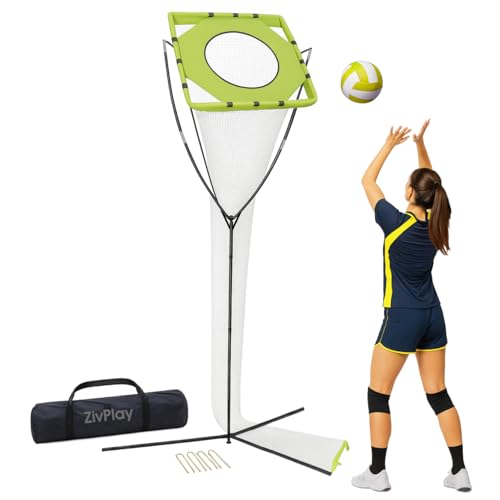
ADJUSTABLE HEIGHT & ANGLE CONTROL Customize your volleyball setter training net height from 7.5 to 11.5 ft and adjust the setting net angle from 45° to 180°. Perfect for players of all ages to improve volleyball setting, serving, and spiking accuracy.
Setting Technique: Hand Position, Footwork, and Ball Contact
Your hands shape every set you deliver, so getting the position right matters more than almost anything else.
Your hands are everything in setting—nail the position, and you’ll control the entire play.
Form a dish shape with thumbs up and fingers spread wide.
Proper hand positioning means contacting the ball with fingertips only—never palms. This gives you control over the balls trajectory and spin when setting the ball.
From the setter position, solid footwork connects everything.
Here’s what to focus on:
- Step toward your target with a small crossover or split step
- Keep elbows slightly bent and push smoothly from wrists and fingertips
- For a quick set, use a small hop and release within 0.3–0.6 seconds
Your hand-eye coordination improves with practice.
Whether delivering a high set or cushion the ball on tough passes, extend your arms rather than slapping.

Common Set Types and When to Use Them
Because each hitter has different timing and positioning needs, you’ll want a variety of sets in your toolkit.
A high set arcs 3–4 meters above the net, giving your outside hitter time for a full three-step approach and maximum power. A quick set travels low and fast—often under half a second from your hands to the hitter’s takeoff—helping your middle beat the block.
The back set goes behind your head toward the opposite antenna, catching blockers off guard. A slide set moves laterally toward the antenna, while a tip/dump is a soft, short placement that punishes out-of-position defenders.
For extra options, use a pipe set or back-row set to attackers positioned 3–4 meters behind the attack line. As a setter, mastering these set types expands your team’s offensive threats.

Precision Target Cloth for Perfect Accuracy: Master your sets with our exclusive precision training cloth, designed to improve your setter accuracy like never before. The long ball return channel ensures seamless practice, allowing you to focus on repetitions without constant ball retrieval.

Elevate Your Precision: Perfect your aim with this self-trainer and ensure your skills are game-ready. Featuring a unique precision training cloth, hone your setter precision like never before. Plus, with the built-in drawstring ball release, focus on your shots without interruptions

Circumference: 25.6 in - 26.4 in. Weight: 15.7 - 17.5 oz. Cover: Sensi-Tec® composite leather.
Beginner Drills to Improve Your Setting Ability
Knowing the different set types is one thing—actually delivering them with consistency takes focused practice. As a setter, you’ll want to build your setting skills through repetition and intentional training.
Start with these three foundational drills:
- Wall sets — Perform 200 fingertip sets against a wall in sets of 20, focusing on soft hands and consistent height to develop touch.
- Squat + set drill — Complete 3 sets of 15 reps while lowering into a controlled squat to strengthen your platform under pressure.
- Target practice — Hang a target 8–10 feet high and aim for 5 consecutive hits to each zone for improved accuracy.
Once comfortable, add a partner drill for quick sets with your middle hitter. Consider weighted progression exercises weekly to build finger strength gradually.


PERFECT SET: A must-have training accessory for developing fundamental setting form; Set includes 2 set trainers for volleyball players of all skill levels

Great Volleyball Gift:Focopot Volleyball Training Kit includes a ball pouch with retractable cord, an adjustable waistband, two hand straps, and a portable backpack, making it the perfect volleyball gift.

PATENT PENDING volleyball setter trainer equipment.
Frequently Asked Questions
What Is the Role of a Setter in Volleyball?
As a setter, you’re the team’s playmaker who takes the second touch to deliver accurate sets for attackers. Your hand positioning and setter footwork create consistent ball placement, while tempo control keeps defenders guessing.
You’ll develop court awareness to read blocks and make quick second touch decision making. Setter communication through calls and signals coordinates your hitters. Deceptive setting disguises your intentions, and strong setter leadership drives your shift offense during fast-paced rallies.
How to Teach Setting in Volleyball for Beginners?
Start with wall exercises—5 to 10 minutes daily—to build hand placement and fingertip control through repetition. Use visual cues like thumbs up and spread fingers to shape proper technique.
Add footwork basics next, drilling the split step and shuffle before introducing partner routines with target passing from varied angles.
Progress to timing drills with a hitter, incorporate feedback loops after each rep, and you’ll see real confidence building fast.
Where Do You Put the Weakest Player in Volleyball?
You’ll want to place your weakest player in a back-row position during serve receive, typically right-back, where stronger passers can cover primary lanes. Consider libero pairing to provide defensive positioning support and communication.
Your rotation strategy should minimize frontcourt matchups by scheduling them opposite your setter backup. Use bench development time and targeted practice drills to build skills. Height considerations matter less when you assign clear psychological roles that boost confidence.
Recent Posts


What Are the Setter’s Responsibilities?
As the setter, you’re responsible for ball distribution and set accuracy on every play. You control tempo control through communication signals with hitters, using quick decision making to exploit gaps in blocking coordination.
Your footwork mechanics help you recover off-target passes during serve receive positioning and change-of-phase offense. You’ll provide court leadership by calling plays and occasionally running feinting plays like dumps to keep opponents guessing.
Bottom Line
You’ve now got the foundation to become your team’s playmaker. Focus on mastering your hand position first, then build footwork habits through daily drills. Even 15 minutes of wall setting practice will sharpen your touch within weeks. Remember, great setters aren’t born—they’re developed through consistent repetition and court awareness. Grab a ball, find a wall, and start building those skills today.