


If you’ve ever watched a volleyball match and wondered what’s actually happening between those explosive spikes and diving saves, you’re not alone. The game follows a predictable rhythm—serve, receive, attack, defend—but understanding why players move where they do and how points accumulate makes everything click. Once you grasp the basic three-touch sequence and rotation rules, you’ll start seeing the strategy hiding in plain sight.
Key Takeaways
- Each rally begins with a serve from behind the end line, which must cross the net into the opponent’s court.
- Teams get three touches—pass, set, attack—to return the ball over the net to the opponent’s side.
- Rally scoring means every rally awards one point, whether your team served or not.
- Six players rotate positions clockwise after winning serve back, with three front-row and three back-row players.
- The first team to win three sets wins the match, with sets played to 25 points (or 15 in deciding sets).
The Serve: Starting Every Rally
Every rally in volleyball begins the same way: with a serve. You’ll stand behind the end line and hit the ball over the net into your opponent’s court. Step on that line, and you’ve committed a foot fault—point goes to the other team.
Understanding volleyball basics explained simply means knowing your serving options: underhand, overhand, jump float, or jump spin. The ball can graze the net and still count, as long as it crosses into play.
Here’s where game flow volleyball gets interesting. If your serve lands untouched or unreturned, that’s an ace—one point for your team. But miss the court, hit the antenna, or fail to clear the net? The receiving team scores instead. Every serve carries real consequences.


All-in-One Volleyball Gift Set – Includes a solo serve trainer, setting trainer, quality backpack, volleyball bracelet, and 50 fun stickers. A perfect gift for volleyball-loving teens!

Volleyball Training Equipment Aid: The volleyball equipment is a must-have for players of all levels who are looking to improve their serving, setting, and spiking skills. It provides a comprehensive training experience that targets all aspects of the game.

Volleyball Rebounder Kit: Elevate your volleyball training with our comprehensive equipment set! Our package includes a volleyball trainer waist belt for stability, an improved elastic cord, upgraded hand straps, two setting straps, two finger trainers, and a convenient drawstring backpack
Receiving the Serve and the First Touch
Once the serve crosses the net, your team needs to step up and take control of the ball. You have three contacts to return it over the net—pass, set, and attack. The first touch matters most because it sets up everything that follows.
Your best option is the forearm pass, also called a bump. You’ll join your forearms together and use soft, controlled contact to direct the ball toward your setter. Aim for a spot about 3–4 meters from the net, near the middle of the court. A clean pass avoids lifting or double-hitting the ball.
Watch for the libero—the player in a different colored jersey. This defensive specialist often handles serve receive because of their passing skills. Even if the serve clips the net, treat it like any other ball.

PASS LIKE A PRO: Use the Pass Rite volleyball training gear to teach proper passing technique by limiting excessive upward arm movement. Small, lightweight velcro wrist and ankle cuffs minimize ball contact and interference

Great Volleyball Gift:Focopot Volleyball Training Kit includes a ball pouch with retractable cord, an adjustable waistband, two hand straps, and a portable backpack, making it the perfect volleyball gift.
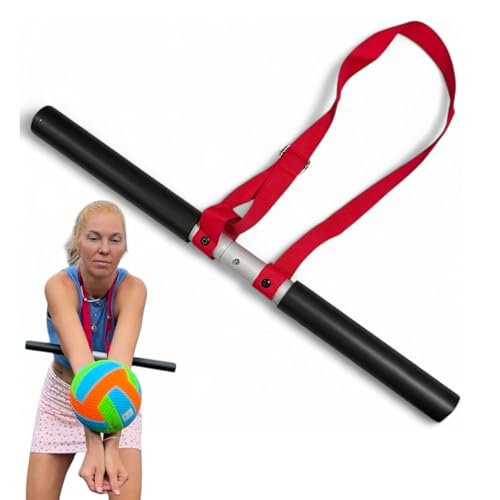
IMPROVE PASSING TECHNIQUE: The Boardee Bump-Pass volleyball gear helps you master proper arm positioning by keeping your arms straight and locked during bump-pass drills; build muscle memory for more consistent, accurate passing during solo or team practice
The Three-Touch Sequence: Pass, Set, Attack
The ball leaves your passer’s arms and rises toward the net—now the real teamwork begins.
Your team has three contacts maximum to return the ball, and each touch has a specific purpose.
The first contact is the pass, typically a forearm bump aimed toward your setter‘s position just behind the 3-meter line.
Your setter then takes the second contact, using fingertips to form a triangle with thumbs and index fingers. This technique delivers a controlled set to your hitter.
The third contact is the attack—a spike, tip, or roll shot designed to ground the ball on your opponent’s court. When an attack directly scores a point, it’s called a kill.
Your setter might use quick “1” sets for middle hitters or high sets for outside attackers to outmaneuver blockers.


The Attack Volleyball Machine extends over the men's net height with a ball release point ranging from 6 ft. to 9 ft, 3 in.

PATENT PENDING volleyball setter trainer equipment.

PERFECT SET: A must-have training accessory for developing fundamental setting form; Set includes 2 set trainers for volleyball players of all skill levels
Rallying Back and Forth Across the Net
Your team’s attack flies across the net, but the rally isn’t over—it’s just getting started.
The opposing team gets their own three contacts to return the ball, and this back-and-forth continues until someone scores.
A rally ends when the ball hits the floor, a team commits a fault, or the referee blows the whistle.
Under rally scoring, every single rally awards a point—no wasted efforts here.
You’ll see players dive for digs and use off-speed shots like tips to keep the ball alive.
Front-row players battle at the net with blocks, while back-row players must stay behind the attack line when jumping to hit.
Touch the net or antenna during play, and you’ve just handed the other team a point.
How Points Are Scored in Rally Scoring
Every rally in modern volleyball puts a point on the scoreboard—no exceptions. This system, called rally scoring, means you’ll earn a point whether your team served or not. The pressure stays constant because every play counts.
Here’s how your team can win a rally and score:
- Ground the ball on your opponent’s court with a kill shot
- Force the opponent into a fault like touching the net or hitting the ball four times
- Serve an ace that lands in-bounds or proves unreturnable
- Catch the opposing team serving out of rotation
Sets typically go to 25 points, and you must win by two. A deciding fifth set plays to 15 points instead.
Close games can extend to scores like 27–25.

Team Rotation and Positioning Rules
Scoring matters, but where you stand when those points happen matters just as much.
Each team places six players on court—three in the front row near the net (positions 2, 3, and 4) and three in the back row (positions 1, 5, and 6).
At the moment of serve, everyone must be in their correct rotational order. Step out of position? That’s a fault, and you’ll lose the point.
Here’s where it gets interesting.
After the serve, players can move anywhere to play their specialized roles. Front-row players block and attack above the net. Back-row players must stay behind the 3-meter attack line if they want to hit above net height.
The libero wears a different jersey and handles defense, replacing back-row teammates without using substitutions.
Key Player Roles During Play
Once the ball crosses the net, each player shifts into a specialized job that keeps the offense and defense running smoothly.
You’ll notice the setter takes charge immediately, positioning to deliver the second contact to an attacker.
Meanwhile, hitters read the set and prepare their approach.
Here’s how the key roles break down during active play:
- Setter – You’re the quarterback, using fingertip sets to distribute the ball to hitters in quick, high, or back sets.
- Outside hitter – You attack from the left side, handle serve-receive, and stay ready for sets from zones 4 and 6.
- Middle blocker – You run fast-tempo attacks and slide laterally to form blocks.
- Libero – You dig hard-driven balls and stabilize serve-receive from the back row.
Common Violations That Stop Play
Violations frequently bring rallies to an abrupt halt, and knowing the most common ones helps you follow the action.
Your team gets three touches maximum to send the ball back over the net. A fourth touch or the same player hitting twice consecutively results in a fault. If you touch the net while the ball is in play, the opposing team wins the rally immediately.
Serving creates its own set of violations. Stepping on or across the end line counts as a foot fault. Serving out of rotation or failing to clear the net also hands the point to your opponent.
Back-row players face restrictions too—they can’t attack above the net if they jump from in front of the 3-meter attack line.
Finally, any ball contacting the antenna is automatically out.
Winning Sets and Matches
Understanding violations keeps you from losing points, but knowing how sets and matches work tells you who actually wins the game.
Avoiding mistakes keeps you in the rally, but understanding the scoring system determines who walks away with the win.
Here’s how scoring breaks down in a standard indoor match:
- Sets 1–4 are played to 25 points using rally scoring, meaning someone scores on every single play.
- You must win by at least two points, so a 24–24 tie continues until one team pulls ahead by two.
- A fifth set goes to 15 points with the same two-point advantage rule.
- The first team to win three sets wins the match in best-of-five format.
Some tournaments use best-of-three instead, where you only need two sets.
Always check event rules before you play—point targets and format can vary.
Recent Posts

How to Keep Volleyball Fun for the Whole Family

How to Help Your Child Build Confidence in Volleyball
Frequently Asked Questions
How Does a Volleyball Game Work for Beginners?
You start each rally by serving from behind the end line. Your opponents get three contacts—typically a pass, set, then attack—to send the ball back over. If they fail or hit it out, you score a point.
When your team wins serve from the other side, everyone rotates one spot clockwise. First team to 25 points wins the set, but you’ll need a two-point lead.
What Are the 5 Basic Steps in Volleyball?
You’ll follow five basic steps each rally.
First, you serve the ball over the net from behind the end line.
Second, the receiving team passes using a forearm bump.
Third, the setter delivers an accurate set to a hitter.
Fourth, the attacker spikes or tips the ball toward the opponent’s court.
Fifth, the defense blocks or digs, then shifts back to offense for the next play.
What Are the 3 C’s in Volleyball?
The 3 C’s in volleyball are Communication, Cover, and Court Awareness. You’ll call “Mine!” or “Got it!” to claim the ball and avoid collisions.
Cover means positioning yourself to save deflections off blocks—you’ll stand ready behind your hitter.
Court Awareness keeps you tracking rotations, open spaces, and your positional rules. These three skills work together to reduce errors and help your team convert defensive plays into scoring opportunities.
How to Start a Volleyball Game Step by Step?
You’ll start with a coin toss to determine which team serves first and court sides.
The server stands behind the end line and hits the ball over the net. If it lands in bounds or the opponent faults, your team scores.
The receiving team gets three contacts to return it.
When your team wins serve back, everyone rotates one spot clockwise.
Bottom Line
Now you understand the basic rhythm of volleyball: serve, receive, pass-set-attack, and rally until someone scores. Every point matters under rally scoring, and rotations keep all six players moving through each position. Start by watching a few games with these fundamentals in mind—you’ll notice the three-touch sequence and recognize faults you’d have missed before. Grab a ball, find a court, and put this knowledge into action.