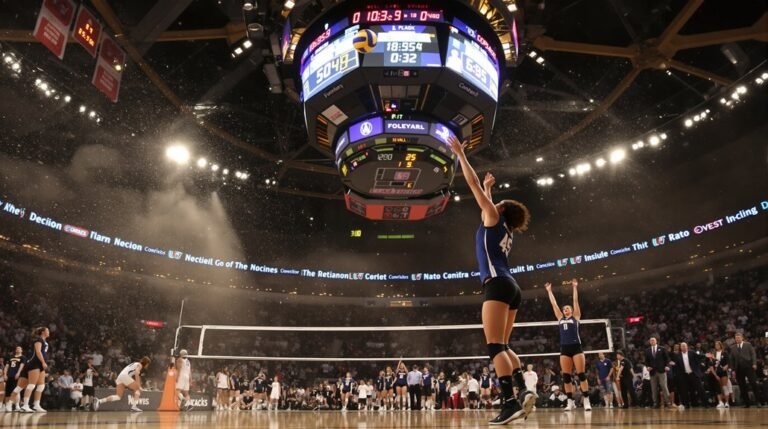


When you’re new to volleyball, watching the referee’s hand signals can feel like trying to decode a foreign language mid-game. You’ll see arms pointing, fingers spreading, and palms rotating—each gesture carrying specific meaning that affects every rally. Understanding these signals won’t just help you follow the action; it’ll sharpen your own play and keep you from costly confusion on the court. Let’s break down the essential signals you’ll encounter most often.
Key Takeaways
- Visual referee signals help players, coaches, and spectators quickly understand calls without verbal explanation during fast-paced volleyball games.
- An arm pointed down means ball in, while both forearms raised with open palms signals ball out.
- Two raised fingers indicate double contact, and a slow upward palm lift signals an illegal catch or lift.
- Pointing at the net, center line, or end line identifies faults involving player positioning or illegal contact.
- A T-shaped hand signal requests a time-out, and crossing forearms with open hands signals the end of a set or match.
Why Understanding Referee Signals Matters
When you’re watching or playing volleyball, knowing referee signals makes everything clearer and keeps the game moving smoothly. You won’t need to wait for verbal announcements to understand what happened. Instead, you’ll immediately recognize whether the ball landed in or out, who committed a fault, or which team earned the point.
Learning ref hand signals volleyball basics benefits everyone on and around the court. Players can quickly adjust their strategy. Coaches can respond without confusion. Even spectators follow the action better.
Youth volleyball rules rely heavily on these visual cues to maintain fair, efficient matches. When officials raise a yellow card, you’ll know it’s a warning. A red card means a penalty point goes to the opponent. This shared language reduces arguments and keeps competition focused on play.

Ball In and Ball Out Signals
Now that you understand why referee signals matter, let’s look at two of the most common ones you’ll see during any match.
When a ball lands inside the court or touches a boundary line, the referee points their arm and fingers straight down toward the floor. This “ball in” signal awards the point to the attacking team.
For a “ball out” call, the referee raises both forearms vertically with open hands and palms facing their body. This means the ball landed completely outside the court or hit an antenna.
If the ball touched a player before going out on that player’s side, you’ll see the referee brush fingers against their vertical palm. The referee then extends an arm toward the team winning the rally to confirm who gets the point.

VOLLEYBALL REFEREE KIT: Outfit your volleyball official with quite simply the best referees kit bag in the market

Premier Referee Kit includes everything needed to get you started with your referee career
Complete Volleyball Training Equipment: This all-in-one package includes a Pouch, perfected Waistband, improved Elastic Cord, upgraded Hand Straps, larger Drawstring Backpack and Gift Box, making it a great Volleyball gift.
Contact Violation Signals
Because contact violations happen frequently during matches, you’ll want to recognize these signals right away.
These calls address how players touch the ball, and spotting them helps you understand the game’s flow.
Here are the key contact violation signals:
- Double contact: The referee raises two spread fingers, showing a player hit the ball twice consecutively
- Four hits: Four spread fingers go up when a team touches the ball four times before sending it over
- Catch or lift: A slow upward forearm lift with palm facing up indicates the ball was held too long
- Ball touched: The referee brushes fingers across an upright palm, signaling a player touched the ball before it landed on their side
Watch for these during your next match.

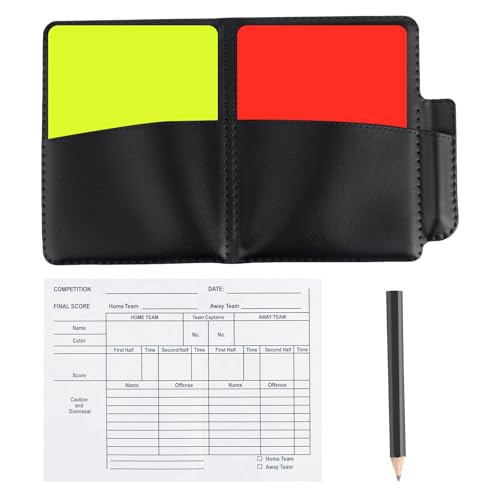
Product Contents: You will receive 1 set of this soccer referee card set, including 5 recording papers, 1 leather case, 1 yellow card, 1 red card and 1 pencil. It is a must-have set for sports coaches, referees, etc.
PRODUCT CONTENTS: 4sets of this Soccer referee card set, each set has 1 yellow card 1 red card 1 black storage wallet 5 recording card 1 pencil, this prefessional set can meet your requirements when work as a referee, 4 sets can make backup or serveral matches

The Soccer Referee Card is made of PU leather, with a soft and comfortable feel. The red and yellow card tags are made of PVC which means high resistant to dirt and fading.
Net and Center Line Fault Signals
Net and center line faults can quickly turn a rally around, so you’ll want to pick up on these signals fast.
When a player touches the net, the referee points to the side where contact happened and identifies the player at fault. The opponent then gets the point.
For reaching beyond the net, you’ll see the ref place a hand above the net with the palm facing down. This shows someone reached into the opponent’s space illegally.
Center line faults happen when a player crosses under the net. The referee points directly to the center line or the exact spot of the violation.
Service foot faults use a similar signal—the ref points to the end line.
After any of these calls, the referee extends an arm toward the team awarded the point.

VOLLEYBALL REFEREE KIT: Outfit your volleyball official with quite simply the best referees kit bag in the market
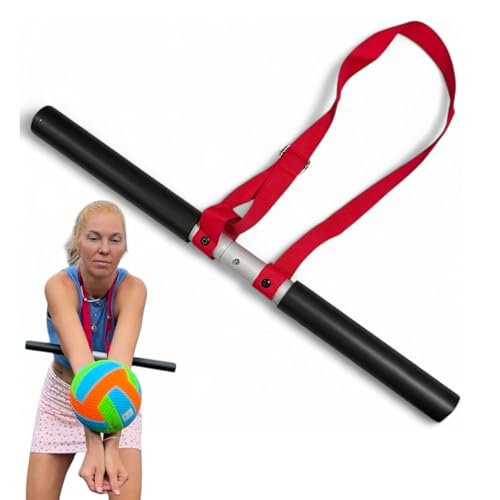
IMPROVE PASSING TECHNIQUE: The Boardee Bump-Pass volleyball gear helps you master proper arm positioning by keeping your arms straight and locked during bump-pass drills; build muscle memory for more consistent, accurate passing during solo or team practice

All-in-One Volleyball Gift Set – Includes a solo serve trainer, setting trainer, quality backpack, volleyball bracelet, and 50 fun stickers. A perfect gift for volleyball-loving teens!
Serving Signals Every Beginner Should Know
Serving kicks off every rally, so these signals come up constantly during a match.
When you’re watching, you’ll notice the first referee extend their arm toward one side of the court—that’s indicating which team serves first. Once both teams are ready, the referee moves their hand toward the serving direction, authorizing the server to begin.
Watch for these common serving fault signals:
- Eight fingers spread open: The server took longer than 8 seconds after the whistle
- Extended arm with palm facing up: The server hit the ball without tossing or releasing it first
- Pointing at the end line: The server stepped on or over the line during their serve
- Pointing at the center line: A foot fault occurred at that location

Blocking and Attack Hit Fault Signals
Blocking and attacking create some of the most exciting moments in volleyball, but they also come with strict rules that referees enforce through specific hand signals.
When you see a referee raise both arms vertically with palms forward, they’re calling a blocking fault. This happens when a blocker touches the ball in the opponent’s space before an attack or blocks a serve.
A hand placed above the net with the palm facing down signals reaching beyond the net. The referee watches whether this interferes with the opponent’s play.
For net violations during blocking or attacking, the referee points to the side and indicates the specific player who touched the net.
A downward chopping motion with the forearm signals an attack hit fault, such as a back-row player attacking illegally from the front zone.
Time-Out and Substitution Signals
Coaches call time-outs strategically to regroup their teams, and you’ll recognize this signal instantly when a referee forms a “T” shape by placing one palm over the fingers of the other hand.
The iconic T-shaped hand signal marks a coach’s strategic pause—one palm crossing fingertips to halt play instantly.
The referee then points to indicate which team requested the break, starting a 30-second timer.
Each team gets two time-outs per set, requested only when the ball is out of play.
For substitutions, watch for the referee’s circular forearm motion—both arms rotating around each other.
Here’s what you should know:
- Teams are limited to six regular substitutions per set
- Players must enter through the designated substitution zone near the scorer’s table
- The second referee checks the scorer’s record before signaling the incoming player
- Libero replacements don’t count toward the six-substitution limit
Warning and Penalty Card Signals
When referees need to address player misconduct, they’ll reach for their penalty cards—and knowing what each display means keeps you informed about match discipline.
A yellow card held at chest level signals a warning. The player hasn’t lost points yet, but they’re on notice. A red card held vertically is more serious—it awards the opponent both a point and service.
Watch for card combinations too. Both cards shown together (stacked) mean expulsion from that set, though the player stays in the penalty area. Cards displayed separately, one after the other, indicate disqualification. That player must leave the competition area entirely.
Delay infractions use a different method. The referee covers their wrist with the appropriate card—yellow for a delay warning, red for a delay penalty.
End of Set and Match Signals
The referee crosses both forearms in front of their chest with open hands to signal a set or match has ended. You’ll see this gesture right after the final point is awarded, and it’s one of the clearest signals to watch for during a game.
Here’s what happens when you see this signal:
- A team has reached 25 points with a two-point lead (or 15 in a deciding fifth set)
- The first referee signs the official scorecard entry
- Teams switch courts unless it’s after the deciding set
- The referee announces and records the set score
When a team wins their third set, the match is complete. The referee uses the same crossed-arms signal, then finishes match formalities like signing the score sheet.
Recent Posts
ASICS Women’s Sky Elite FlyteFoam 3 Volleyball Shoes

4 Best Compression Gear for Volleyball
Frequently Asked Questions
What Does 2 Thumbs up Mean in Volleyball?
When a referee shows two thumbs up, you’re seeing the signal for a double fault or replay.
This means both teams committed faults at the same time—like both players touching the net simultaneously.
The ref can’t assign blame to just one side, so no point gets awarded.
The score stays the same, and your team simply replays the rally with the same server.
How to First Ref Volleyball?
You’ll stand on the elevated platform opposite the score table and whistle to start each rally once both teams are ready.
Watch the net closely for touches and the server’s foot for faults.
After each play, use official hand signals—arm toward the scoring team for a point, forearms up for out.
Enforce the 8-second serve rule, track substitutions (six per set max), and manage time-outs.
What Are the Basic Hand Signals?
You’ll use these core signals during every match. Point toward the floor for “ball in” and raise both forearms with palms inward for “ball out.”
After each rally, extend your arm toward the team that won the point. Show two fingers for double contact or four fingers for four hits.
For a catch or lift, slowly scoop your forearm upward with palm facing up.
What Does It Mean When a Volleyball Ref Holds up Two Fingers?
When a volleyball ref holds up two fingers spread apart, you’re seeing a double contact call.
This means a player touched the ball twice in a row illegally—something that happens most often during setting errors.
The ref will then point to the team that gets the point.
One exception: if the double touch occurs during a block, it’s not a fault.
Bottom Line
Now that you’ve learned these essential referee signals, you’re ready to follow volleyball matches with confidence. Keep practicing by watching games and identifying each call as it happens. You’ll find that recognizing signals like the raised forearms for out or the brushing motion for a touch becomes second nature after just a few matches. Understanding these visual cues makes the game more enjoyable and helps you appreciate every play.